14 days free, no card, and we move your data across for youStart a lab trial

Recognised by





Trusted & regulated

NABL accredits your lab. No software can be “NABL approved”, ours included. What software can do is make the records an assessor reads accumulate as a side effect of daily work, instead of a three-month scramble before the visit.
We will tell you which clauses your current records already answer, and which they do not.
An assessor wants to see months of routine, not a fortnight of preparation. Daily QC, documented sample rejection, two-person release, competency records. Running, not promised.
Accumulates by itself: audit trail, rejection log with reasons, entry/release identities, versioned corrections. From the first day on any plan.
Internal QC charted with rules applied, EQAS cycles enrolled and responded to, deviations investigated and closed as corrective actions.
The Lab Pro plan's pack: Levey-Jennings charts with Westgard checks, EQAS cycle records, quality indicators and CAPA trails, kept per analyte and per machine.
The quality manual, SOPs for every bench, document control, staff files with training and competency evidence. This is your pathologist's authorship. No software writes it for you.
Feeds it evidence: TAT numbers, rejection rates, calibration and service logs, so every SOP's records section points at data that already exists.
Application to NABL (ISO 15189 based), desktop review, then the on-site assessment: the assessor pulls samples and follows their trail through your records.
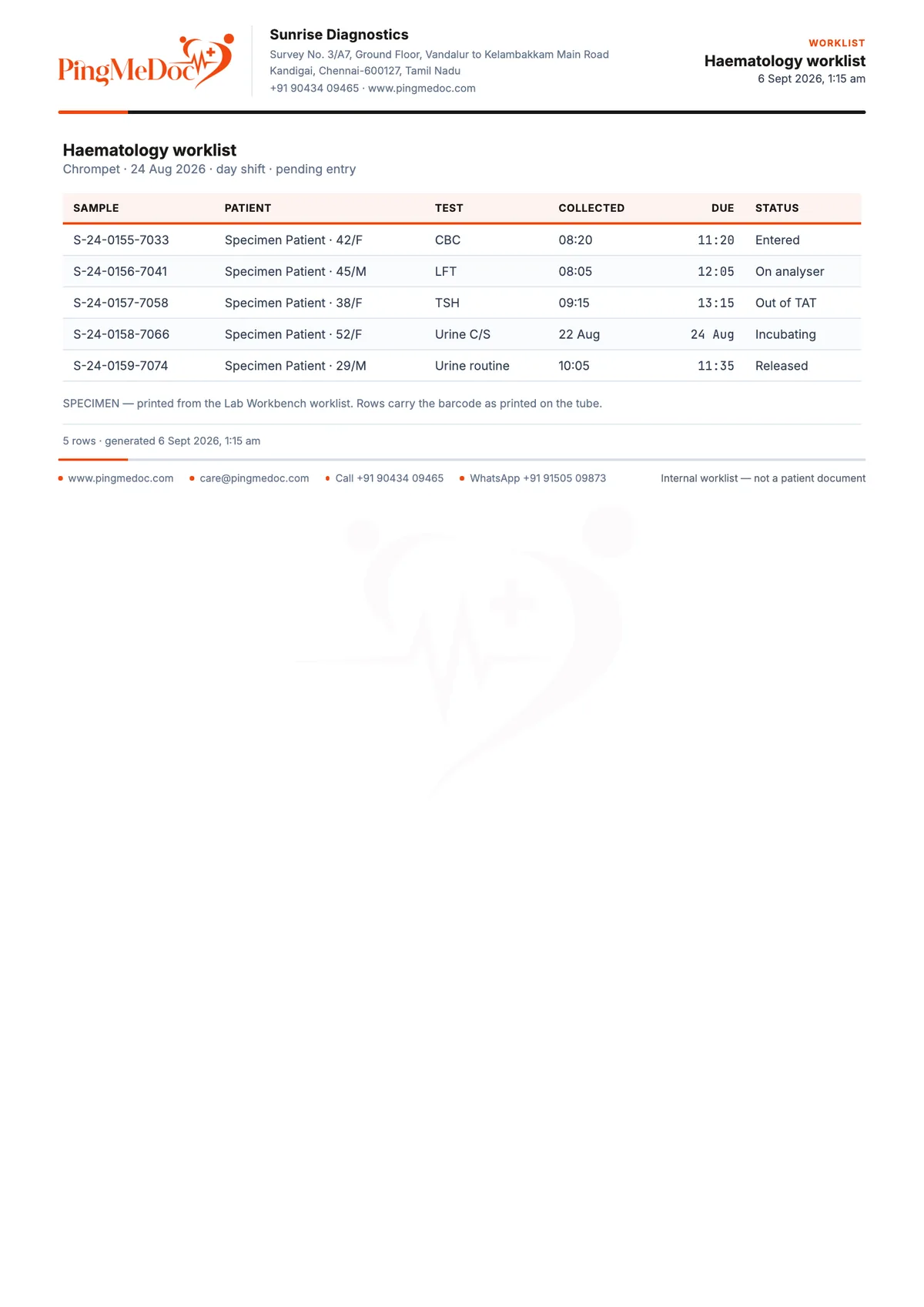
The pull-a-thread test is the custody chain: any barcode traces to who collected, received, ran, entered and released. In seconds, on a screen.
Surveillance visits, continued EQAS, indicator reviews. Accreditation is a habit with a certificate attached, not an event.
The same records keep accumulating. Nothing extra to run for a visit.
Timelines are indicative: a well-run lab moves faster, a busy season slower. The consultant, the manual and the assessment fees are your lab’s own; none of that is sold here.
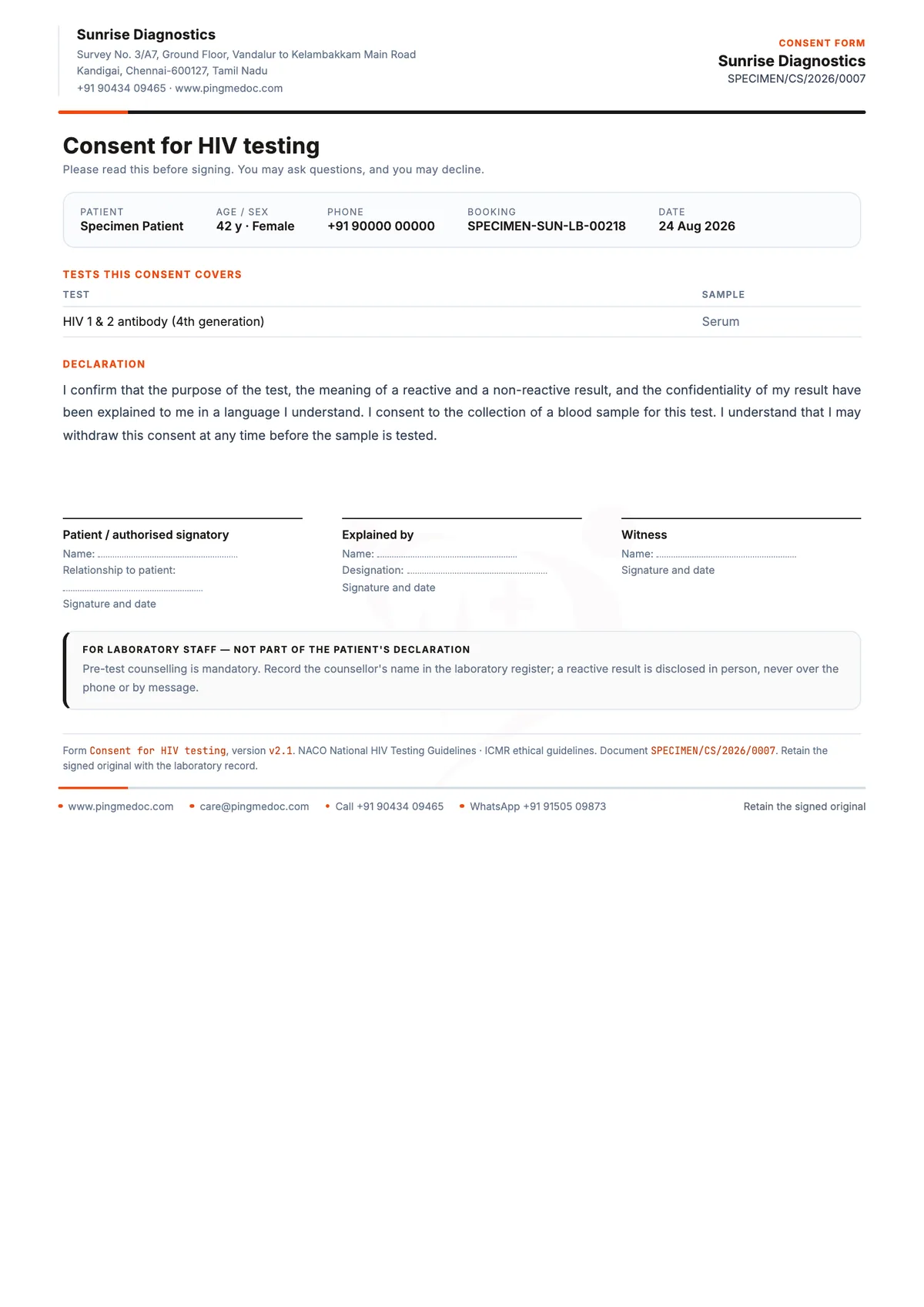
A consent form with its statutory basis, version and witness line; a bench worklist that carries the barcode as printed on the tube. Both print from the system, numbered and dated, so the file builds itself as you work.
Two-person release, the rejection log, versioned corrections and the full audit trail are in every plan: the phase-one records cost nothing extra to start accumulating.
The quality pack an assessor reads as one story: Levey-Jennings with Westgard rules, EQAS cycles, quality indicators and CAPA, across up to five centres. Priced below where the NABL-grade platforms start.
Open a free trial and the quality file starts filling from your first shift: every result, every correction, every QC run, with a name and a time against it.