14 days free, no card, and we move your data across for youStart a lab trial

Recognised by





Trusted & regulated

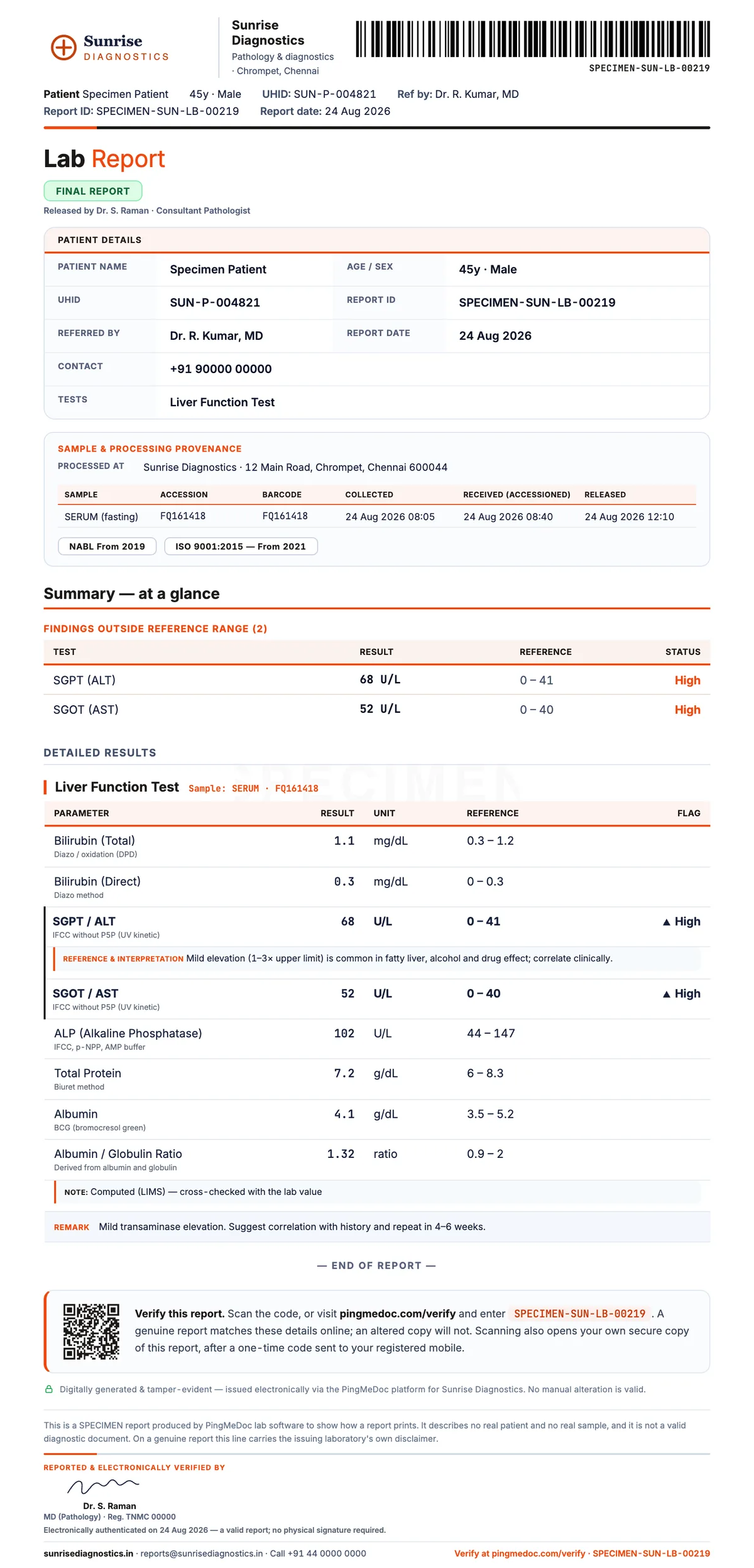
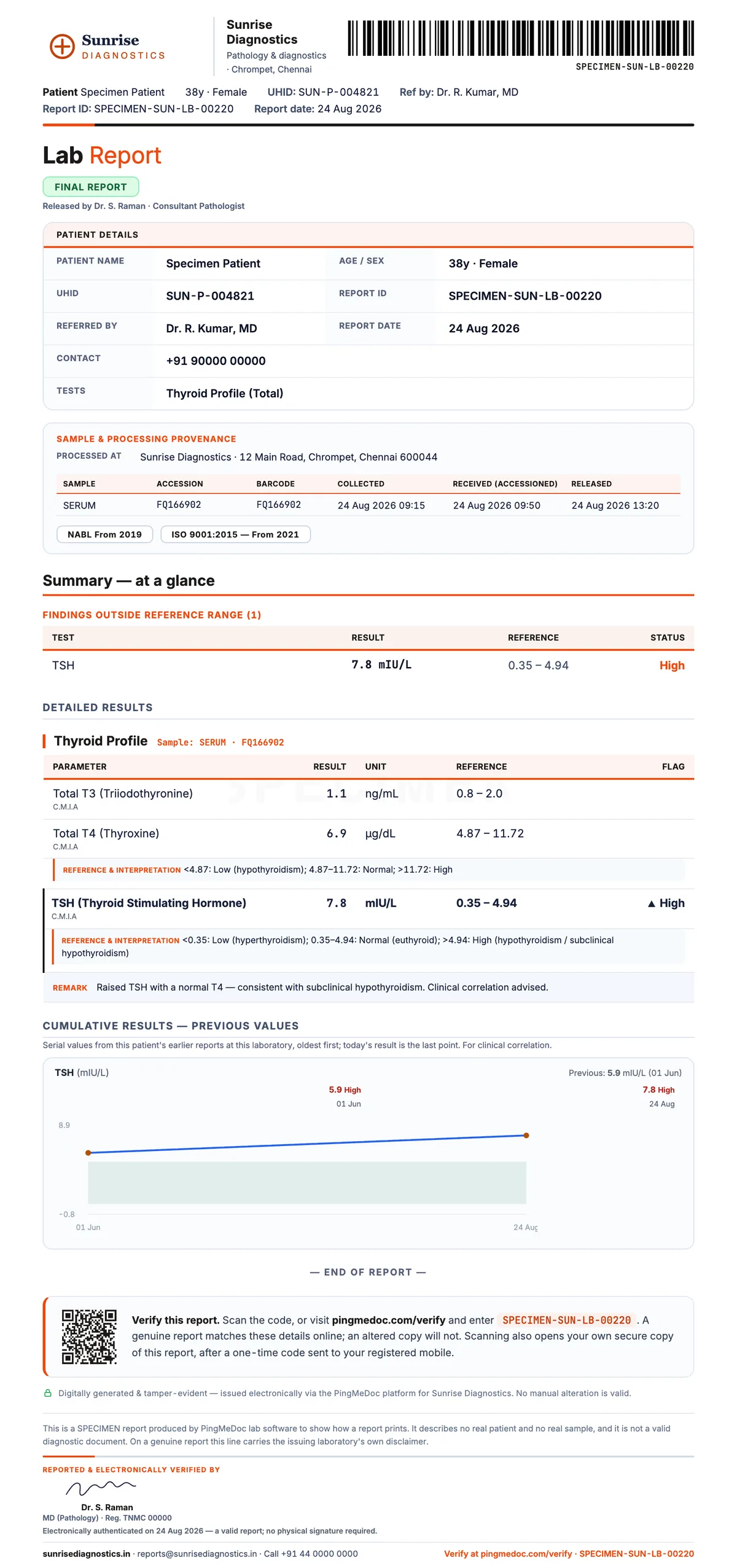
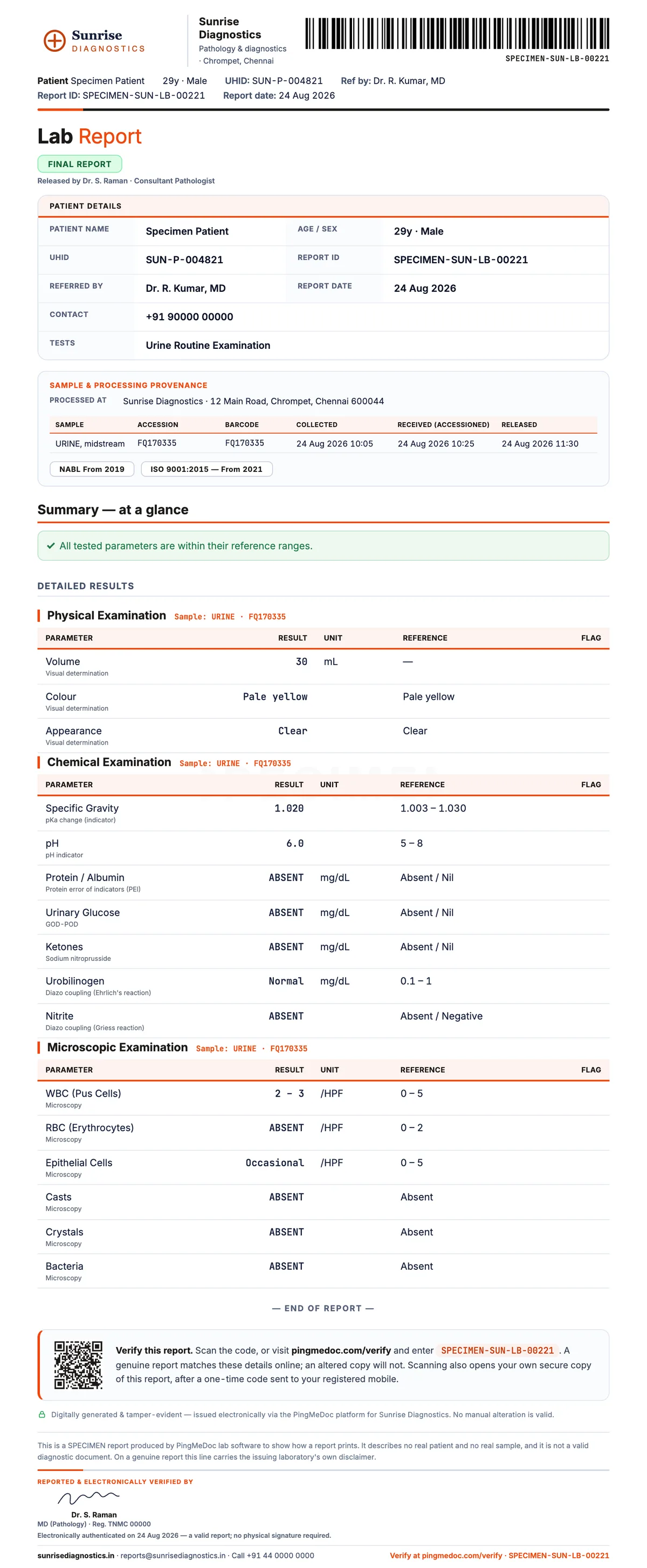
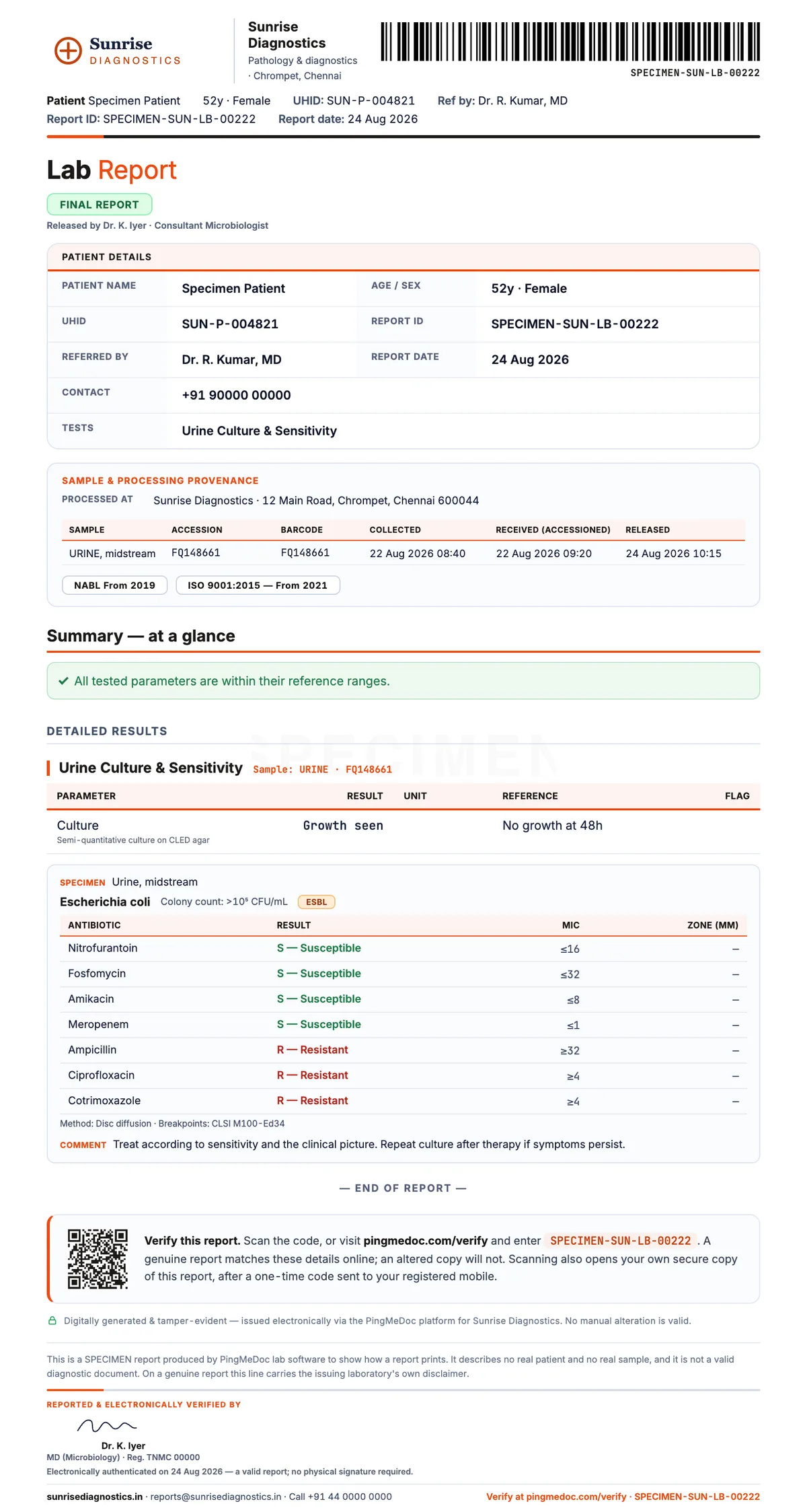
Numeric panels, a narrative urine routine, a two-day culture. Each printed the way it leaves the lab: your letterhead, correct flags, the earlier value where it matters, two signatures, and a QR that proves the report is yours.
Send us the report you print today and we will set the layout up to match it.
Flags land only where the range for this patient's age and sex says so, and the interpretation line is the lab's own words, not a template surprise.
The earlier value is printed beside today's, a rising TSH reads as a story, which is what the treating doctor actually wants from you.
Descriptive reports are where Word still wins in most labs. This one is a structured form the technician fills in seconds, not a document to typeset.
Organism, colony count and the S/I/R table with its CLSI breakpoint version, the things an assessor asks for, printed as a matter of course.
Every report above is a specimen, no real patient, and every value checked against the printed reference range. Your own reports carry your logo, your layout, your signing doctors and your interpretations; 335 tests with units, methods and age/sex-banded ranges come preloaded, and descriptive templates (urine, semen, smear, culture) are editable in the catalog.
One login enters, a different login releases. The names on the foot of each specimen are the record, not decoration.
Age-in-days and sex pick the band. A newborn's bilirubin and a 60-year-old's are not judged by one number.
An amended report goes out as version 2, marked as such. The first version stays on file. Nobody edits history.
The QR opens the genuine copy on an OTP-guarded page, an employer or doctor can check a report is not doctored.
Open a trial, load the tests you run every day, and release one. Your logo, your layout, your signatories, no upgrade required.