Rx
100% Genuine
Sealed pack
Pharmacist-verified
Quality assured
Pan-India delivery
Standard shipping
100% Genuine
Sealed pack
Pharmacist-verified
Quality assured
Pan-India delivery
Standard shipping
Important advisories specific to this medicine.
Pregnancy
Consult doctor
Alcohol
Avoid
Prevention (prophylaxis) of angina pectoris (chest pain) due to coronary artery disease; chronic stable angina
Headache, dizziness, flushing, lightheadedness, nausea, weakness, low blood pressure, palpitations
Nitroglycerin is converted to nitric oxide in vascular smooth muscle, causing relaxation. It predominantly dilates veins, reducing preload and myocardial oxygen demand, and also dilates coronary arteries to improve blood flow to the heart.
Every order from PingMeDoc Pharmacy is reviewed by a licensed pharmacist before dispatch. Prescription medicines ship only after the Rx is verified.
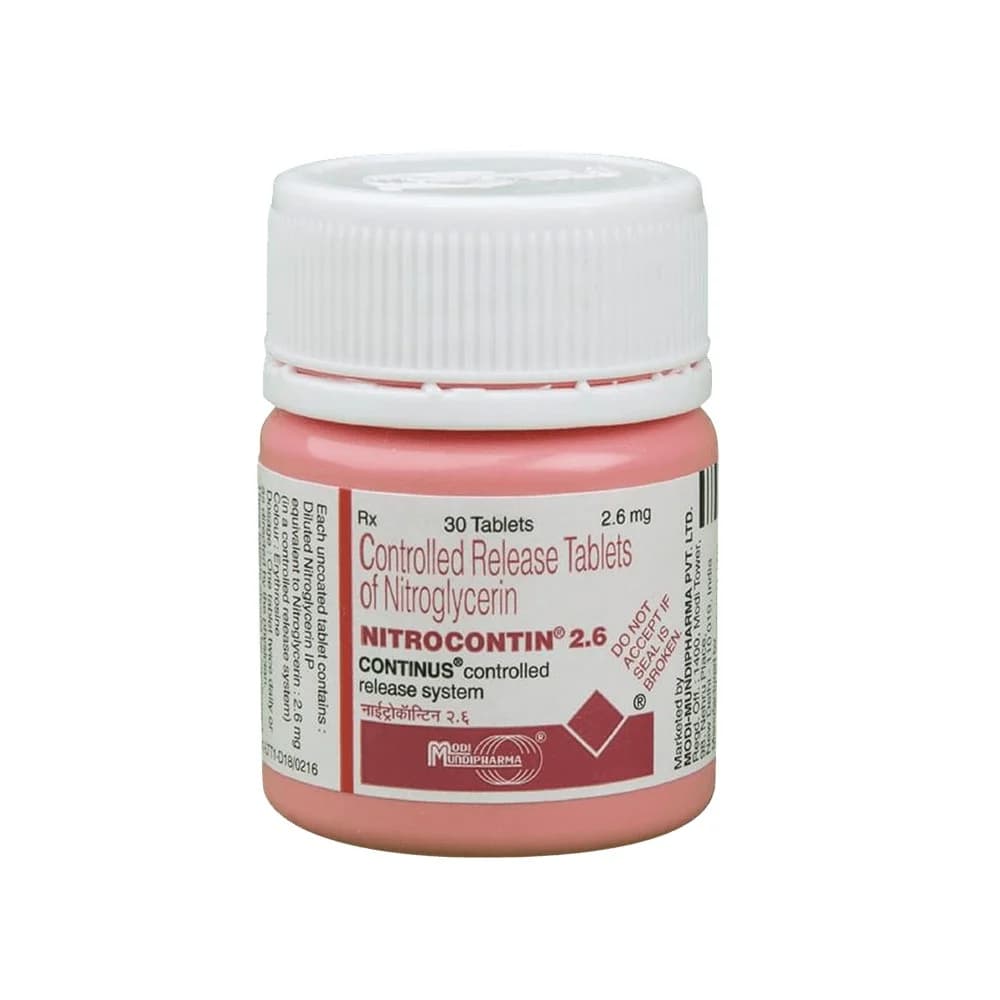
Manufacturer: Modi Mundi Pharma Pvt Ltd
Medical disclaimer
Product information is for awareness only and does not replace medical advice. For Rx medicines, a valid prescription is required. Consult your doctor or pharmacist for personalised guidance.
Sources: Manufacturer labeling/pack information, established medical literature (nitrates), standard pharmacology references, CDSCO/Schedule H rules
Drug | Tablet
Prevention (prophylaxis) of angina pectoris (chest pain) due to coronary artery disease; chronic stable angina
Nitroglycerin is converted to nitric oxide in vascular smooth muscle, causing relaxation. It predominantly dilates veins, reducing preload and myocardial oxygen demand, and also dilates coronary arteries to improve blood flow to the heart.
Oral tablet (modified/controlled release). Take exactly as prescribed, usually 1–2 times daily. Swallow whole with water; do not crush or chew. Can be taken with or without food. Maintain a nitrate-free interval (as advised) to reduce tolerance. Not for acute angina relief unless specifically advised by a doctor.
Headache, dizziness, flushing, lightheadedness, nausea, weakness, low blood pressure, palpitations
Schedule H: use only on prescription. May cause significant hypotension and dizziness—avoid driving/operating machinery if affected. Use with caution in low blood pressure, dehydration, severe anemia, recent heart attack, hypertrophic obstructive cardiomyopathy, aortic stenosis, increased intracranial pressure or history of stroke. Do not stop suddenly without medical advice. Seek urgent care for severe chest pain, fainting, or allergic reaction.
Contraindicated with PDE5 inhibitors (sildenafil, tadalafil, vardenafil) and riociguat due to severe hypotension. Additive BP lowering with other antihypertensives, diuretics, alcohol, tricyclic antidepressants, antipsychotics. Ergot alkaloids (e.g., ergotamine) may reduce antianginal effect and increase BP/ischemia risk.
Store at room temperature (below 25°C), protected from light and moisture. Keep in original strip/container and out of reach of children.
Nitrocontin 6.4 Tablet, Nitroglyn CR 2.6 Tablet, Angised SR 2.6 Tablet, Nitro SR 2.6 Tablet, Sustac 2.6 Tablet
Oral tablet (modified/controlled release). Take exactly as prescribed, usually 1–2 times daily. Swallow whole with water; do not crush or chew. Can be taken with or without food. Maintain a nitrate-free interval (as advised) to reduce tolerance. Not for acute angina relief unless specifically advised by a doctor.
Store at room temperature (below 25°C), protected from light and moisture. Keep in original strip/container and out of reach of children.
Yes, this product requires a valid prescription (Rx). Upload it during checkout when prompted.
Yes. Prices and availability can change based on inventory and serviceability. The latest details are shown at checkout.
Select a variant, add to cart, enter delivery address, upload prescription if required, and pay securely.
Other products patients also browse for similar needs.