
Introduction#
Hypertension (high blood pressure) affects an estimated 30% of Indian adults, yet nearly half are unaware of their condition. Called the "silent killer," uncontrolled BP damages your heart, kidneys, brain, and eyes without obvious symptoms until a crisis (a heart attack, stroke, or kidney failure) occurs. The good news: lifestyle changes alone can reduce systolic BP by 10–15 mmHg, sometimes enough to avoid or reduce medication.
What You Need to Know#
- Normal BP: Below 120/80 mmHg.
- Elevated: 120–129 / < 80 mmHg, lifestyle changes needed.
- Stage 1 Hypertension: 130–139 / 80–89 mmHg. Medication may be needed depending on cardiovascular risk.
- Stage 2 Hypertension: ≥ 140/90 mmHg, medication usually required alongside lifestyle changes.
- Hypertension is the leading cause of heart attacks, strokes, and chronic kidney disease in India.
- Indians develop hypertension about a decade earlier than Western populations, often in their 30s.
Step-by-Step Guide / Key Points#
1. Reduce Salt Intake
- Target: Less than 5 g of salt per day (about 1 level teaspoon).
- Indian diets are salt-heavy: papad, pickles, chutneys, processed snacks, and restaurant food are major culprits.
- Use lemon, herbs, and spices (cumin, coriander, turmeric) for flavour instead of salt.
- Read labels: "sodium" on packaged foods is hidden salt.
2. Follow a Heart-Healthy Indian Diet
- Increase potassium-rich foods: bananas, coconut water, spinach, sweet potatoes, tomatoes, and curd.
- Eat more whole grains, dal, vegetables, and fruits.
- Reduce saturated fats: limit ghee to 1–2 teaspoons/day, avoid fried snacks, reduce red meat.
- Reduce sugar: excess sugar raises BP independently of weight gain.
3. Exercise Regularly
- Aim for 150 minutes of moderate exercise per week, brisk walking, cycling, or swimming.
- Even a daily 30-minute walk can lower BP by 5–8 mmHg.
- Include strength training 2 days per week.
- Avoid very heavy weight-lifting if BP is uncontrolled (can cause dangerous spikes).
4. Maintain a Healthy Weight
- For every 1 kg of weight lost, systolic BP drops by approximately 1 mmHg.
- Target BMI: 18.5–22.9 for Indians (lower than the global cut-off of 25).
- Waist circumference: Men < 90 cm, Women < 80 cm.
5. Limit Alcohol and Quit Smoking
- Limit alcohol to 1 drink/day (women) or 2 drinks/day (men). Excess alcohol raises BP.
- Smoking does not directly raise chronic BP but massively increases cardiovascular event risk.
6. Manage Stress
- Chronic stress raises cortisol, which in turn raises BP. Practice deep breathing, meditation, or yoga for 15–20 minutes daily.
- Prioritise 7–8 hours of quality sleep. Sleep apnoea is an underdiagnosed cause of resistant hypertension.
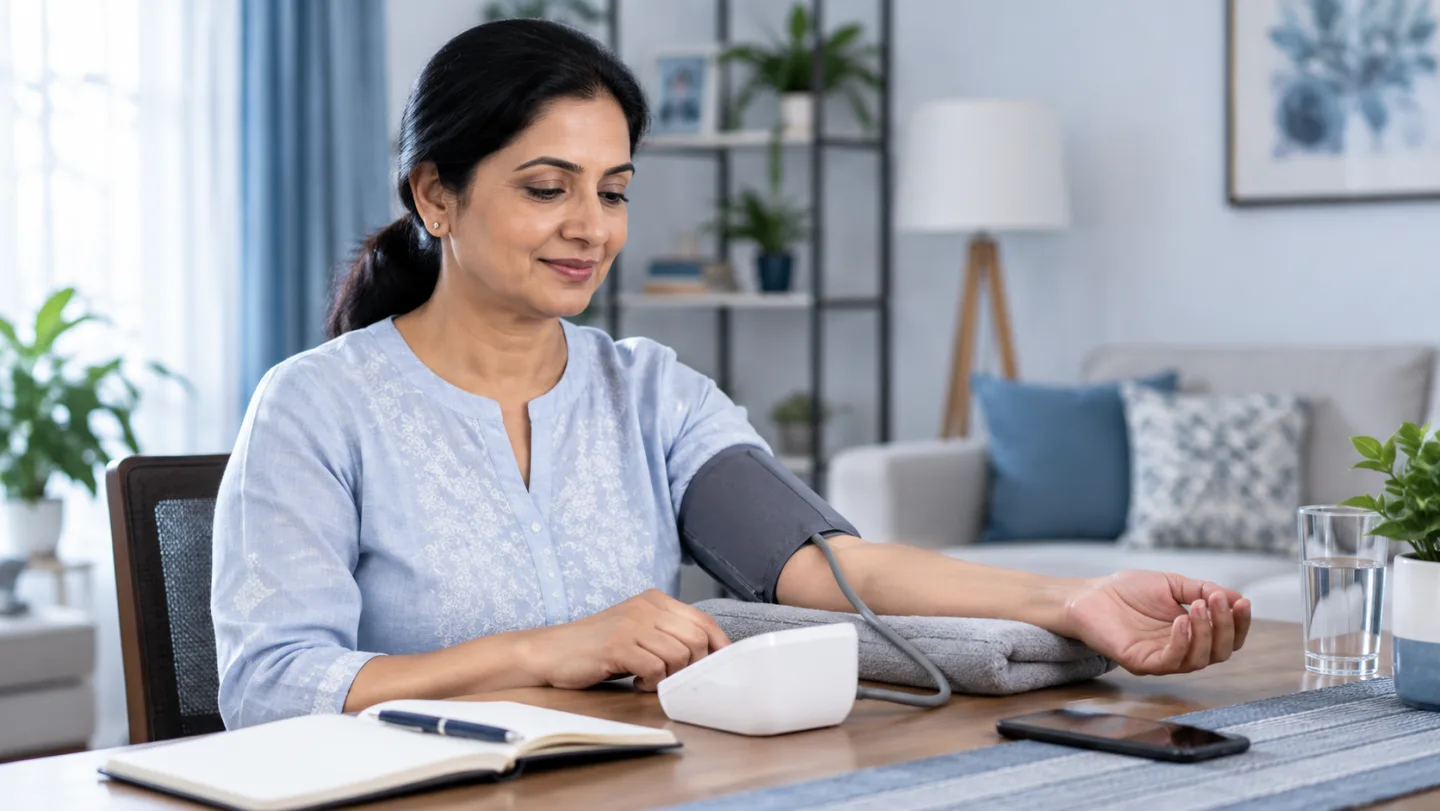
7. Monitor at Home
- Use a validated digital BP monitor (upper-arm cuff type, not wrist type).
- Measure twice in the morning (before medication) and twice in the evening, 1 minute apart. Record the average.
- Sit quietly for 5 minutes before measuring. Keep feet flat on the floor, arm supported at heart level.
Tips & Best Practices#
- Take medications at the same time every day. Never skip doses because your BP "feels normal."
- Get a kidney function test and lipid profile at least annually, hypertension damages these organs silently.
- If your BP consistently exceeds 180/120 mmHg with symptoms (headache, chest pain, vision changes), seek emergency care immediately.
Common Mistakes to Avoid#
- Stopping medication because BP is "under control". The medication IS why it is controlled; stopping causes rebound spikes.
- Relying on symptoms to gauge BP. Hypertension is usually asymptomatic until organ damage occurs.
- Using wrist-type BP monitors. They are less accurate than upper-arm cuff devices.
- Over-restricting salt to zero. Some salt is needed; the goal is moderation (< 5 g/day), not elimination.
- Ignoring sleep quality: untreated sleep apnoea makes hypertension resistant to medication.
Summary#
Managing blood pressure at home requires a multi-pronged approach: reduce salt, eat a potassium-rich Indian diet, exercise 150 minutes/week, maintain a healthy weight, limit alcohol, manage stress, and monitor BP regularly. These changes can lower BP by 10–15 mmHg. Combine them with prescribed medication and regular check-ups for the best long-term outcomes.