
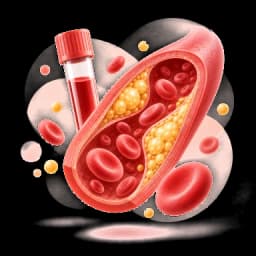
A Lipid Profile measures total cholesterol, HDL (good cholesterol), LDL (bad cholesterol), VLDL and triglycerides. It is the standard blood test for assessing heart-attack and stroke risk and for guiding cholesterol-lowering treatment.
Clinical use cases
Why doctors order it
Cardiovascular risk profiling
High cholesterol (hyperlipidaemia)
High triglycerides
Cardiovascular disease risk
Atherosclerosis risk
Metabolic syndrome
About this test
A Lipid Profile measures total cholesterol, HDL (good cholesterol), LDL (bad cholesterol), VLDL and triglycerides. It is the standard blood test for assessing heart-attack and stroke risk and for guiding cholesterol-lowering treatment.
Clinical significance
High LDL and triglycerides and low HDL raise the risk of atherosclerosis, heart attack and stroke. Triglycerides rise sharply after meals, which is why fasting gives the most reliable result. Abnormal values guide diet, lifestyle and statin therapy decisions, especially in people with diabetes, hypertension or a family history of heart disease.
Get tested if you have these symptoms
Family history of heart disease, high cholesterol or stroke
Reference ranges vary by lab and patient demographic. Interpret with a clinician.
Sample & preparation
Sample type
Blood (Serum)
Fasting
Yes
Report TAT
Same day / 24 hours
Home collection
Available
How to prepare
1Fasting 8–10 hours required
Frequently asked questions
What is the Lipid Profile?
A Lipid Profile measures total cholesterol, HDL (good cholesterol), LDL (bad cholesterol), VLDL and triglycerides. It is the standard blood test for assessing heart-attack and stroke risk and for guiding cholesterol-lowering treatment.
What conditions does the Lipid Profile detect?
The Lipid Profile helps detect and monitor conditions including High cholesterol (hyperlipidaemia), High triglycerides, Cardiovascular disease risk, Atherosclerosis risk, Metabolic syndrome.
How should I prepare for the Lipid Profile?
Fasting 8–10 hours required
What is the normal range for the Lipid Profile?
Total cholesterol: < 200 mg/dL desirable
LDL (bad) cholesterol: < 100 mg/dL optimal
HDL (good) cholesterol: > 40 mg/dL (men), > 50 (women)
Triglycerides: < 150 mg/dL normal Note: reference ranges may vary by laboratory and should be interpreted by your doctor in the context of your overall health.
How much does the Lipid Profile cost?
The Lipid Profile is available at ₹499 (MRP ₹999) on PingMeDoc with free home sample collection. Prices are inclusive of sample collection charges.
Why is fasting required for a lipid profile?
Triglycerides rise sharply after a meal, so a 9–12 hour overnight fast gives the most accurate triglyceride and calculated LDL values. Water is allowed; avoid tea, coffee and alcohol during the fast.
Is VLDL cholesterol good or bad?
VLDL is a 'bad' cholesterol — it carries triglycerides in the blood and, like LDL, contributes to plaque build-up in arteries. Lower levels are better; it is usually estimated as one-fifth of your triglyceride value.
How can I lower my cholesterol naturally?
A diet low in saturated fat and refined carbs, more fibre, regular exercise, weight loss, quitting smoking and limiting alcohol all help. If lifestyle changes aren't enough, your doctor may add medication — recheck levels after 8–12 weeks.
What does the lipid profile cost and is home collection available?
The Lipid Profile is ₹499 (MRP ₹999) on PingMeDoc with free home sample collection across India. A trained phlebotomist visits at your chosen time and the digital report is delivered the same day or within 24 hours.
Does the Lipid Profile test require fasting?
Yes. You must fast for 12 hours before the Lipid Profile test. You may drink water during the fasting period. Avoid alcohol for 24 hours before the test.
How much does the Lipid Profile test cost at PingMeDoc?
The Lipid Profile test costs ₹499 at PingMeDoc (MRP ₹999). Free home sample collection is included. NABL-accredited lab processing. Reports delivered digitally in same day / 24 hours.
How long does it take to get Lipid Profile test results?
Lipid Profile test results are typically available within same day / 24 hours after sample collection. You can view and download your digital report from your PingMeDoc dashboard.
What type of sample is needed for the Lipid Profile test?
The Lipid Profile test requires blood (serum). A trained phlebotomist will collect the sample at your home at your preferred time slot.
Is the Lipid Profile test NABL accredited?
Yes. All lab tests on PingMeDoc, including the Lipid Profile test, are processed by NABL-accredited and ISO-certified labs. Reports are reviewed and available on your dashboard.
Is home sample collection free for this test?
Yes. Home sample collection for the Lipid Profile test is free when booking through PingMeDoc. A phlebotomist visits your home or office at your scheduled time slot.
What conditions does the Lipid Profile test help screen for?
A Lipid Profile measures total cholesterol, HDL (good cholesterol), LDL (bad cholesterol), VLDL and triglycerides. It is the standard blood test for assessing heart-attack and stroke risk and for guiding cholesterol-lowering treatment. It is commonly used for: Cardiovascular risk assessment, High cholesterol monitoring, Triglyceride evaluation, HDL/LDL ratio analysis.
How should I prepare for the Lipid Profile test?
Fast for 10–12 hours before the test. Water is allowed during fasting. Avoid alcohol for 24 hours before the test. Continue prescribed medications unless advised otherwise.
Test details are for general information only and not a substitute for medical advice. Reference ranges vary between labs. Always discuss results with a registered medical practitioner before starting, stopping or changing any treatment.
₹499₹99950% OFF
Free home collection
What this test measures
7 parameters in the Lipid Profile
The Lipid Profile reports the following parameters. Reference ranges are typical adult values from NABL-accredited partner labs and may vary slightly by lab, age and sex — always read results with your doctor.
Family history of heart disease, high cholesterol or stroke
Diabetes, high blood pressure or obesity
Chest discomfort or breathlessness on exertion
Smoking or a sedentary lifestyle
Routine cardiac risk check after age 30
Frequently Asked Questions
What is the Lipid Profile?
A Lipid Profile measures total cholesterol, HDL (good cholesterol), LDL (bad cholesterol), VLDL and triglycerides. It is the standard blood test for assessing heart-attack and stroke risk and for guiding cholesterol-lowering treatment.
What conditions does the Lipid Profile detect?
The Lipid Profile helps detect and monitor conditions including High cholesterol (hyperlipidaemia), High triglycerides, Cardiovascular disease risk, Atherosclerosis risk, Metabolic syndrome.
How should I prepare for the Lipid Profile?
Fasting 8–10 hours required
What is the normal range for the Lipid Profile?
Total cholesterol: < 200 mg/dL desirable
LDL (bad) cholesterol: < 100 mg/dL optimal
HDL (good) cholesterol: > 40 mg/dL (men), > 50 (women)
Triglycerides: < 150 mg/dL normal Note: reference ranges may vary by laboratory and should be interpreted by your doctor in the context of your overall health.
How much does the Lipid Profile cost?
The Lipid Profile is available at Rs 499 (MRP Rs 999) on PingMeDoc with free home sample collection across India. Prices are inclusive of sample collection charges.