
Introduction#
India is the diabetes capital of the world, with over 10 crore adults living with diabetes. Diet is the single most powerful tool for managing blood sugar, yet most Indian patients struggle because generic Western diet advice does not account for our food culture. This guide provides a practical, evidence-based Indian diabetes diet plan that works with roti, rice, dal, and sabzi, not against them.
What You Need to Know#
- Carbohydrates directly raise blood sugar. Not all carbs are equal, whole grains (brown rice, ragi, jowar, bajra) release sugar slowly, while refined carbs (maida, white bread, instant noodles) cause rapid spikes.
- Glycaemic Index (GI) matters. Low-GI foods (< 55) are preferable: whole dal, rajma, chana, most vegetables, and curd.
- Portion control is as important as food choice. Even healthy carbs in excess will raise blood sugar. A single roti or half a cup of rice per meal is a reasonable starting point.
- Protein and fibre slow sugar absorption. Pair carbs with dal, paneer, eggs, chicken, or a large portion of vegetables.
- Meal timing matters. Eat at consistent times, avoid skipping meals, and keep 4–5 hours between meals.
Step-by-Step Guide / Key Points#
Breakfast (7:00–8:30 AM):
- Moong dal chilla with mint chutney + 1 boiled egg or a glass of buttermilk.
- Vegetable poha (use flattened rice in moderation) with peanuts and curry leaves.
- Ragi dosa with sambar: ragi has a low GI and is rich in calcium.
Lunch (12:30–1:30 PM):
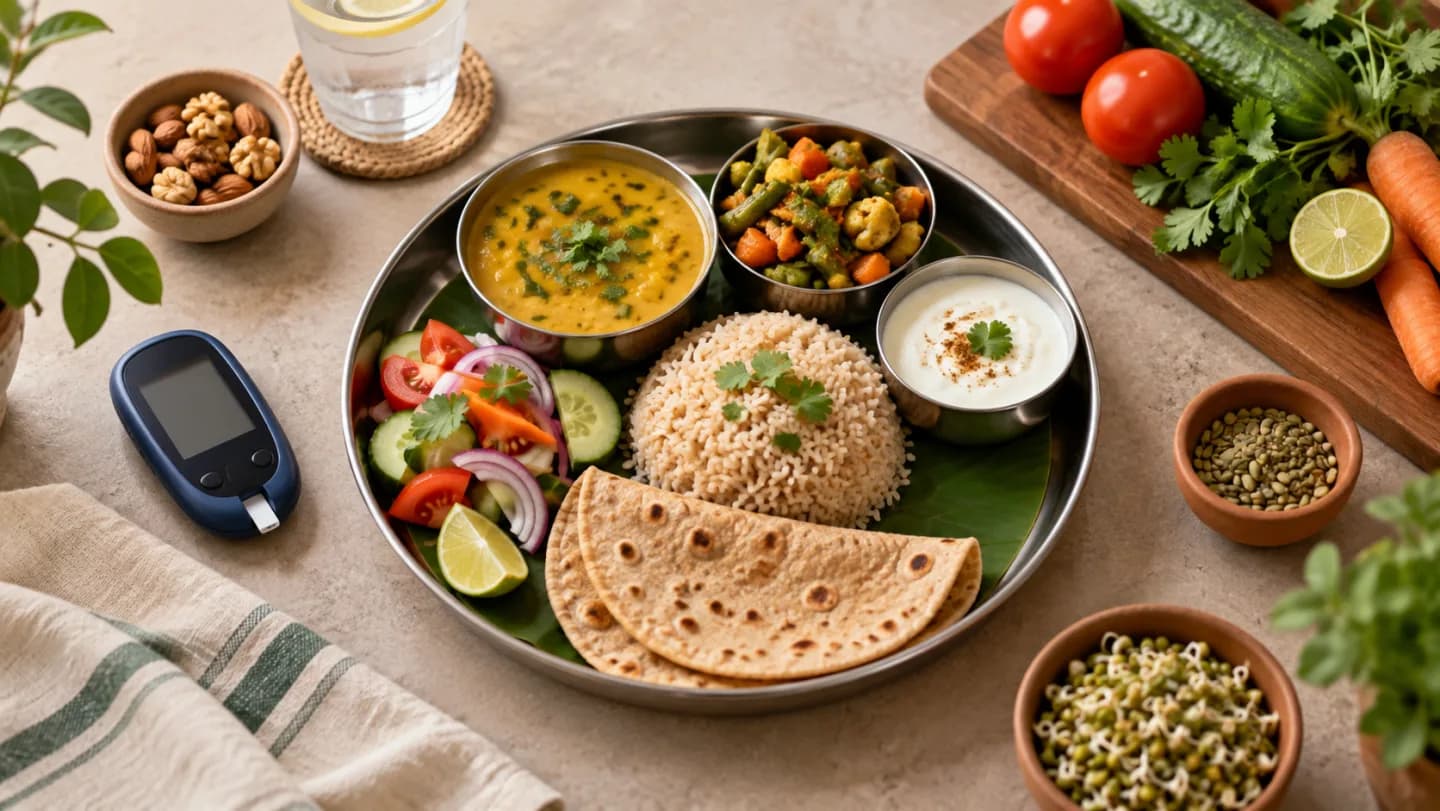
- 1 small roti (preferably jowar/bajra) + 1 katori dal + 1 katori sabzi + salad (cucumber, tomato, onion).
- Replace white rice with brown rice or cauliflower rice if your post-prandial sugar consistently exceeds 180 mg/dL.
- Add a protein source: paneer bhurji, grilled chicken, or egg curry.
Snack (4:00–5:00 PM):
- A handful of roasted chana or makhana.
- 1 small fruit: guava, apple, or pear (avoid mango, grapes, banana in large quantities).
- Green tea or black coffee (unsweetened).
Dinner (7:00–8:00 PM):
- Keep dinner lighter than lunch: 1 roti + sabzi + dal or soup.
- Finish dinner by 8 PM to allow a 10–12 hour overnight fast before your fasting blood sugar check.
Foods to Strictly Avoid:
- Sugar, jaggery in excess, honey, sweetened drinks (cola, packaged juice).
- Maida-based foods: naan, white bread, biscuits, cakes, samosa.
- Fried snacks: pakora, bhajia, chips.
- Fruit juices (even fresh). Eat the whole fruit instead for fibre.
Tips & Best Practices#
- Walk for 10–15 minutes after every meal, this is the single most effective habit for lowering post-meal sugar spikes.
- Use the plate method: Half your plate = non-starchy vegetables; one-quarter = protein; one-quarter = whole-grain carbs.
- Monitor with an HbA1c test every 3 months to track long-term diet effectiveness.
- Methi (fenugreek) seeds soaked overnight and consumed on an empty stomach may improve fasting sugar (evidence is moderate but the practice is safe).
- Curd (dahi) is beneficial, probiotics may improve insulin sensitivity. Avoid sweetened yogurt.
Common Mistakes to Avoid#
- Replacing sugar with jaggery or honey, they raise blood sugar almost as much as table sugar.
- Eating fruits in unlimited quantities, even "healthy" fruits contain fructose; limit to 1–2 servings per day.
- Skipping meals to lower sugar, this causes rebound hyperglycaemia and makes control harder.
- Relying on "diabetic foods" marketed as sugar-free, many contain maltodextrin or refined flour that spike sugar.
- Ignoring portion sizes, even brown rice or whole-wheat roti will raise sugar if eaten in excess.
Summary#
Managing diabetes with an Indian diet is entirely possible. Focus on whole grains (ragi, jowar, bajra), adequate protein (dal, paneer, eggs), plenty of vegetables, and strict portion control. Walk after meals, monitor your blood sugar regularly, and track progress with HbA1c every 3 months. Small, consistent changes beat drastic diets every time.