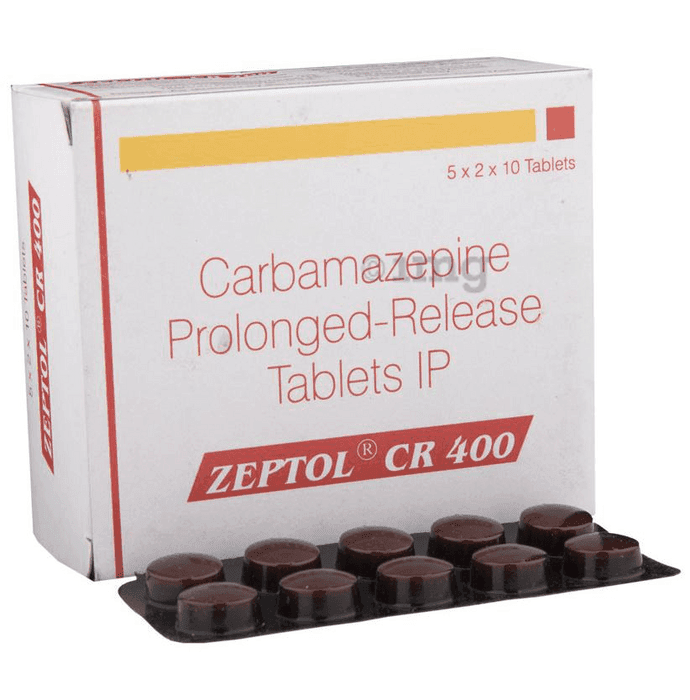
Form, strength & pack
10`S
Inclusive of all taxes
Prescription required — upload during checkout when prompted.
Carbamazepine (400mg)
Before you take it
Use with caution / Consult doctor (may cause fetal harm; do not stop suddenly; folic acid and specialist monitoring advised)
Breast feeding CAUTION
Avoid (increases drowsiness and may worsen side effects; can affect seizure control)
Driving UNSAFE
Kidney CONSULT YOUR DOCTOR
Liver CAUTION
Monograph
Carbamazepine (400mg)
Treatment of epilepsy (partial seizures and generalized tonic-clonic seizures); trigeminal neuralgia and other neuropathic pain where carbamazepine is indicated; sometimes used in bipolar disorder/mania under specialist care
Carbamazepine stabilizes hyperexcited nerve membranes by blocking voltage-gated sodium channels, reducing repetitive neuronal firing. This helps control seizures and decreases abnormal nerve pain transmission. The controlled-release (CR) formulation provides more stable blood levels over time.
Take tablet by mouth exactly as prescribed. Swallow whole; do not crush or chew (CR). Usually taken 1–2 times daily with or after food to reduce stomach upset; take at the same time each day. Dose is individualized and may be titrated gradually; do not stop abruptly without medical advice.
Dizziness, drowsiness, headache, nausea, vomiting, constipation, dry mouth, blurred/double vision, unsteadiness, fatigue, skin rash
Prescription-only medicine. May cause serious skin reactions (SJS/TEN) especially in patients with HLA-B*1502 (common in some Asian populations) and HLA-A*3101; seek urgent care for rash, blistering, fever. Risk of blood disorders (aplastic anemia/agranulocytosis) and liver injury—monitor CBC and LFTs if advised; report sore throat, fever, mouth ulcers, unusual bruising/bleeding, jaundice. Can cause hyponatremia (low sodium) leading to confusion, seizures. Causes drowsiness—avoid driving/operating machinery until effects are known. Avoid abrupt withdrawal (may trigger seizures). Use caution in hepatic impairment, cardiac conduction problems, glaucoma, elderly. Not recommended in patients with bone marrow depression. May reduce effectiveness of hormonal contraceptives—use additional contraception.
Potent enzyme inducer—reduces effect of oral contraceptives, warfarin, doxycycline, many antiretrovirals. Levels increased by macrolide antibiotics (erythromycin/clarithromycin), azole antifungals (fluconazole/itraconazole), verapamil/diltiazem, grapefruit juice. Levels decreased by rifampicin, phenytoin, phenobarbital. Additive CNS depression with alcohol, benzodiazepines, opioids. Serious interaction with MAO inhibitors (avoid; require washout). Increased risk of hyponatremia with diuretics (e.g., hydrochlorothiazide).
Store below 25°C in a dry place, protected from light and moisture. Keep in original blister pack and out of reach of children.
Zeptol CR 400 Tablet (Sun Pharma), Tegretol CR 400 Tablet (Novartis), Mazetol CR 400 Tablet, Zen Retard 400 Tablet, Carbamazepine CR 400 mg tablets (generic brands)
At a glance
Good to know
Treatment of epilepsy (partial seizures and generalized tonic-clonic seizures); trigeminal neuralgia and other neuropathic pain where carbamazepine is indicated; sometimes used in bipolar disorder/mania under specialist care
Dizziness, drowsiness, headache, nausea, vomiting, constipation, dry mouth, blurred/double vision, unsteadiness, fatigue, skin rash
Carbamazepine stabilizes hyperexcited nerve membranes by blocking voltage-gated sodium channels, reducing repetitive neuronal firing. This helps control seizures and decreases abnormal nerve pain transmission. The controlled-release (CR) formulation provides more stable blood levels over time.
Take tablet by mouth exactly as prescribed. Swallow whole; do not crush or chew (CR). Usually taken 1–2 times daily with or after food to reduce stomach upset; take at the same time each day. Dose is individualized and may be titrated gradually; do not stop abruptly without medical advice.
Store below 25°C in a dry place, protected from light and moisture. Keep in original blister pack and out of reach of children.
Yes, this product requires a valid prescription (Rx). Upload it during checkout when prompted.
Yes. Prices and availability can change based on inventory and serviceability. The latest details are shown at checkout.
Select a variant, add to cart, enter delivery address, upload prescription if required, and pay securely.

Brand
SUN PHARMA
View all products from this brand
Manufacturer
SUN PHARMA
Medical disclaimer: product information is for awareness only and does not replace medical advice. For Rx medicines, a valid prescription is required. Consult your doctor or pharmacist for personalised guidance. Sources: Manufacturer labeling/pack insert, Indian Pharmacopoeia, established medical literature (e.g., neurology/epilepsy guidelines), drug interaction references
Other products patients also browse for similar needs.
Same brand, other products you might also want.