
Introduction
High cholesterol (dyslipidaemia) is a major risk factor for heart attacks and strokes. An estimated 25–30% of urban Indians and 15–20% of rural Indians have abnormal cholesterol levels. While statins are highly effective, lifestyle and dietary changes are the first-line treatment and can reduce LDL cholesterol by 10–20%, sometimes enough to avoid medication entirely. This guide provides Indian-specific dietary strategies.
What You Need to Know
- LDL ("bad") cholesterol builds up in artery walls, causing blockages. Target: below 100 mg/dL (below 70 for high-risk patients).
- HDL ("good") cholesterol removes LDL from arteries. Target: above 40 mg/dL (men), 50 mg/dL (women).
- Triglycerides are fats from your diet stored in fat cells. Target: below 150 mg/dL.
- Dietary cholesterol (from eggs, meat) has a smaller impact than saturated and trans fats on blood cholesterol levels.
- Get a lipid profile to know your baseline numbers.
Step-by-Step Guide / Key Points
Foods That Lower Cholesterol:
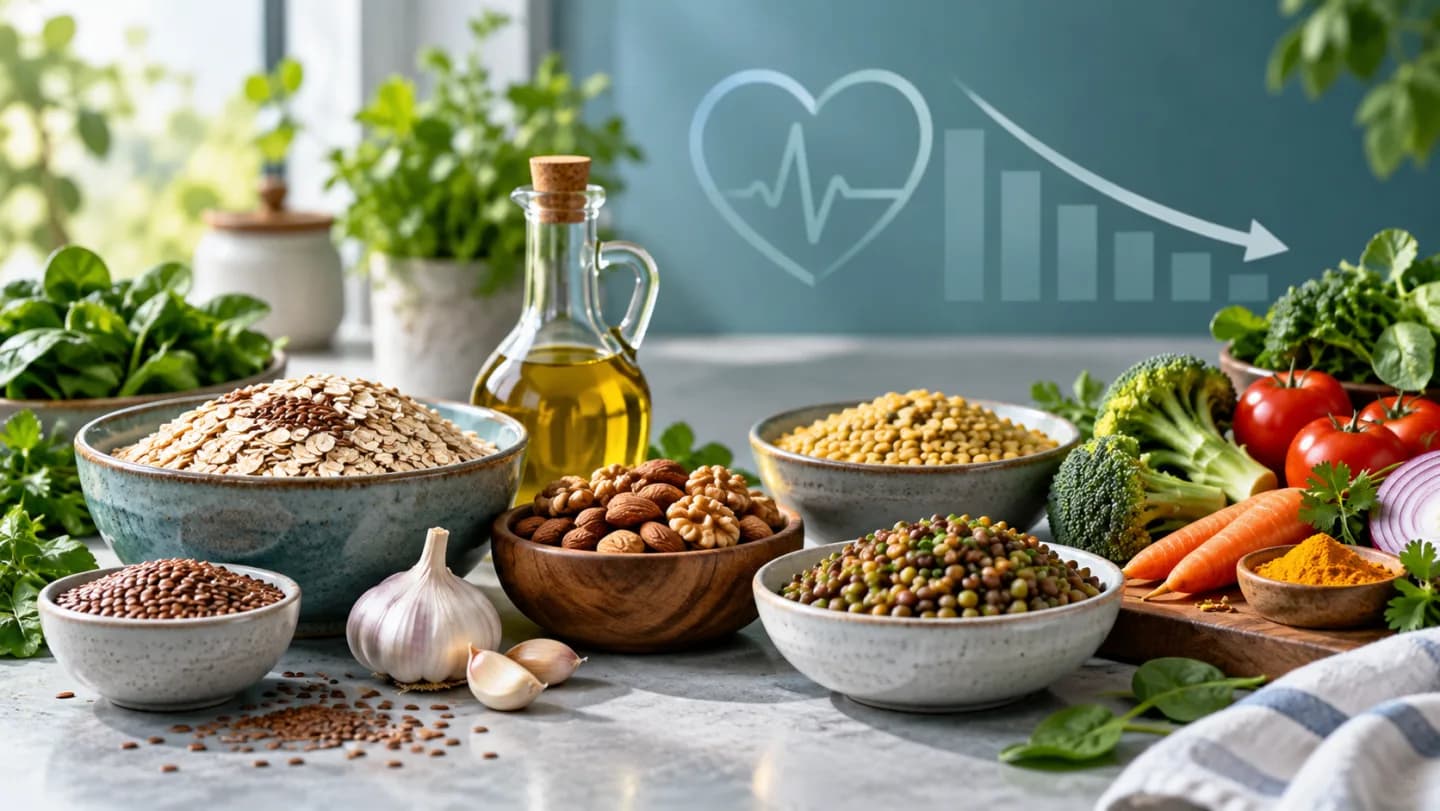
- Oats and barley (jau): Rich in beta-glucan soluble fibre, which binds cholesterol in the gut and helps excrete it. 3 g/day of beta-glucan can lower LDL by 5–10%.
- Methi (fenugreek) seeds: Soak 1 tablespoon overnight, consume on an empty stomach. Contains saponins that reduce cholesterol absorption.
- Flaxseeds (alsi): Rich in omega-3 and fibre. Grind and add to rotis, smoothies, or raita. 2 tablespoons/day can lower LDL by 5–15%.
- Garlic: 1–2 raw cloves daily may modestly reduce total cholesterol. Best consumed raw or lightly crushed.
- Nuts: Almonds and walnuts (a handful/day) lower LDL by replacing unhealthy snacks. Walnuts are especially rich in omega-3.
- Legumes (dal, rajma, chana): High in soluble fibre and plant protein. Replacing some animal protein with legumes lowers cholesterol.
- Fish (fatty fish twice a week): Salmon, sardines, mackerel, rich in omega-3 fatty acids that lower triglycerides.
- Fruits (apple, guava, citrus, amla): Pectin fibre in apples and vitamin C in amla support cholesterol reduction.
- Plant sterols/stanols: Found in fortified cooking oils and spreads; 2 g/day can lower LDL by 10%.
Foods to Reduce or Avoid:
- Deep-fried foods: Samosa, pakora, puri, bhatura, cooked in reused oil that generates trans fats.
- Full-fat dairy in excess: Limit paneer, cheese, butter, and cream. Switch to low-fat milk and curd.
- Red meat and organ meats: High in saturated fat. Limit to 1–2 servings per week.
- Bakery products: Biscuits, cakes, pastries. Often made with trans fats (vanaspati/dalda) and maida.
- Coconut oil and palm oil in excess: High in saturated fat; use sparingly.
- Trans fats (vanaspati/dalda): The worst offender. Check packaged-food labels for "partially hydrogenated vegetable oil."
Cooking-Oil Strategy:
- Use a blend or rotate oils monthly: mustard oil (rich in MUFA and omega-3), rice bran oil (balanced MUFA/PUFA), groundnut oil, or olive oil for salads.
- Limit total cooking oil to 2–3 teaspoons per person per day.
- Never reuse oil for deep frying, oxidised oil is highly atherogenic.
Tips & Best Practices
- Combine diet with 150 minutes/week of exercise, aerobic exercise raises HDL and lowers triglycerides.
- Lose 5–10% of body weight if overweight. This alone can lower LDL by 5–8% and triglycerides by 20%.
- Re-check your lipid profile after 3 months of lifestyle changes to assess progress.
- If LDL remains above target after 3–6 months of lifestyle changes, discuss statin therapy with your doctor. Get a baseline LFT before starting.
Common Mistakes to Avoid
- Eliminating all fats: your body needs healthy fats (MUFA, PUFA, omega-3). It is the type, not just the quantity, that matters.
- Believing "cholesterol-free" labels mean healthy, many cholesterol-free foods are loaded with sugar or trans fats.
- Replacing ghee with vanaspati: vanaspati (hydrogenated fat) is far worse for cholesterol than ghee.
- Taking over-the-counter supplements (garlic pills, fish oil capsules) without testing or medical advice.
- Ignoring triglycerides: very high triglycerides (> 500 mg/dL) can cause pancreatitis and need urgent treatment.
Summary
Lowering cholesterol naturally with an Indian diet is achievable: eat oats, methi, flaxseeds, nuts, legumes, and fish; cook with MUFA-rich oils in controlled amounts; avoid deep-fried foods, trans fats, and excess saturated fat. Combine with regular exercise and weight management. Recheck your lipid profile in 3 months, if lifestyle changes are not enough, medication is the next step.