Medicall Chennai 2026
What we learned on the floor at Medicall Chennai 2026
A stall, four products on one AI, and a lot of good questions from the people who run clinics, labs and pharmacies.

Dr. Balaji Krishnan, Founder of PingMeDoc™
· Updated · 4 min read
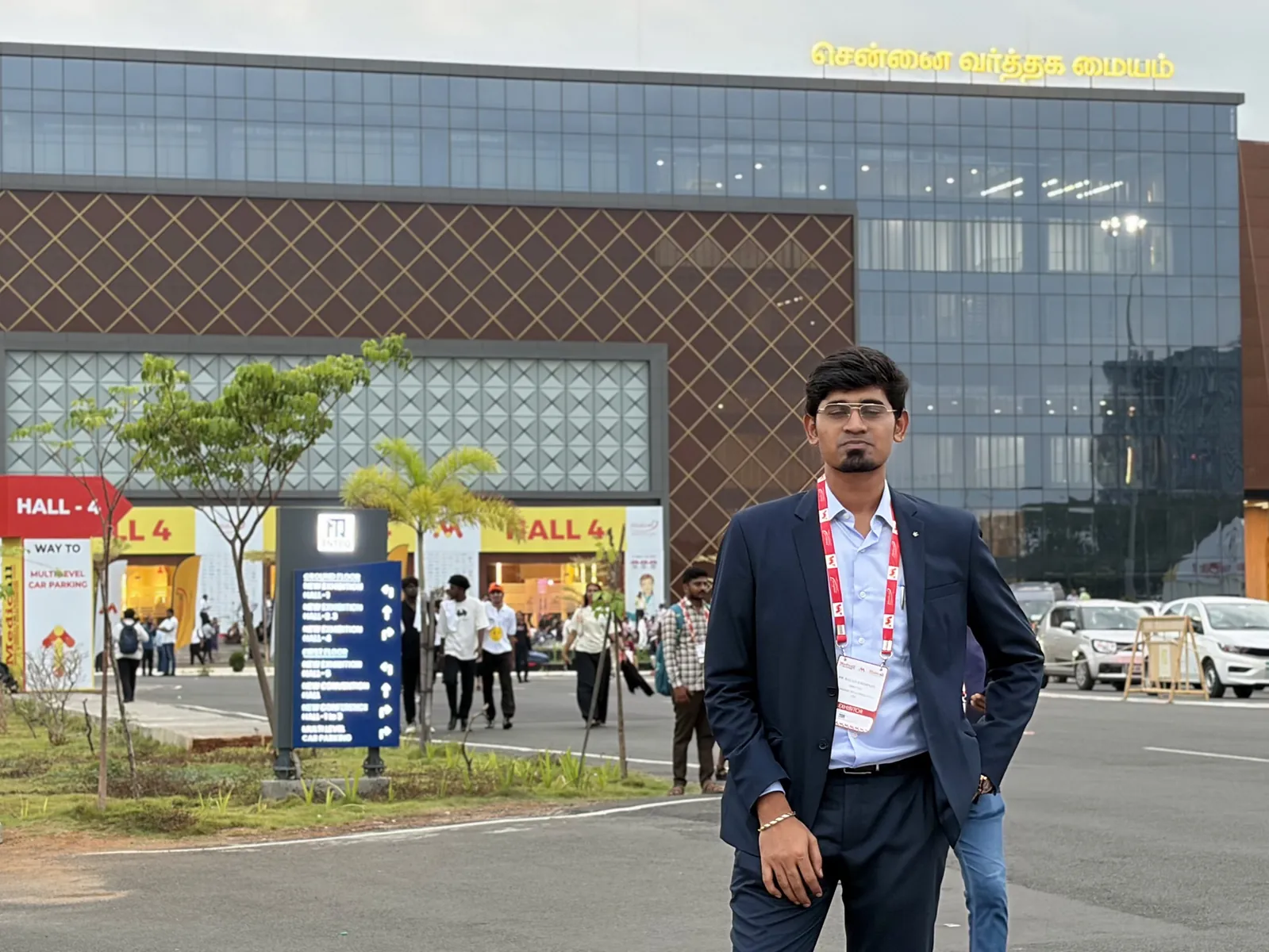
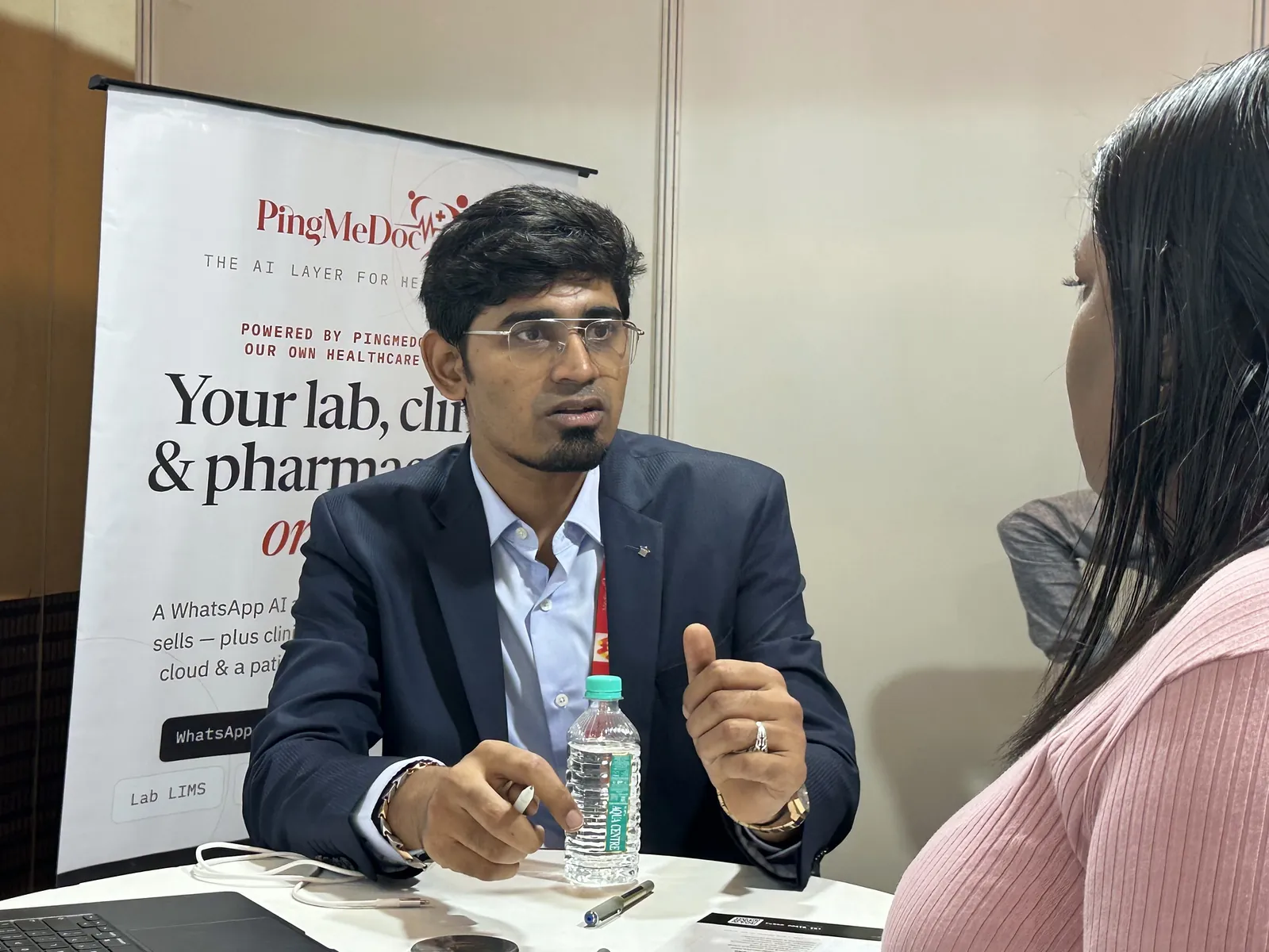
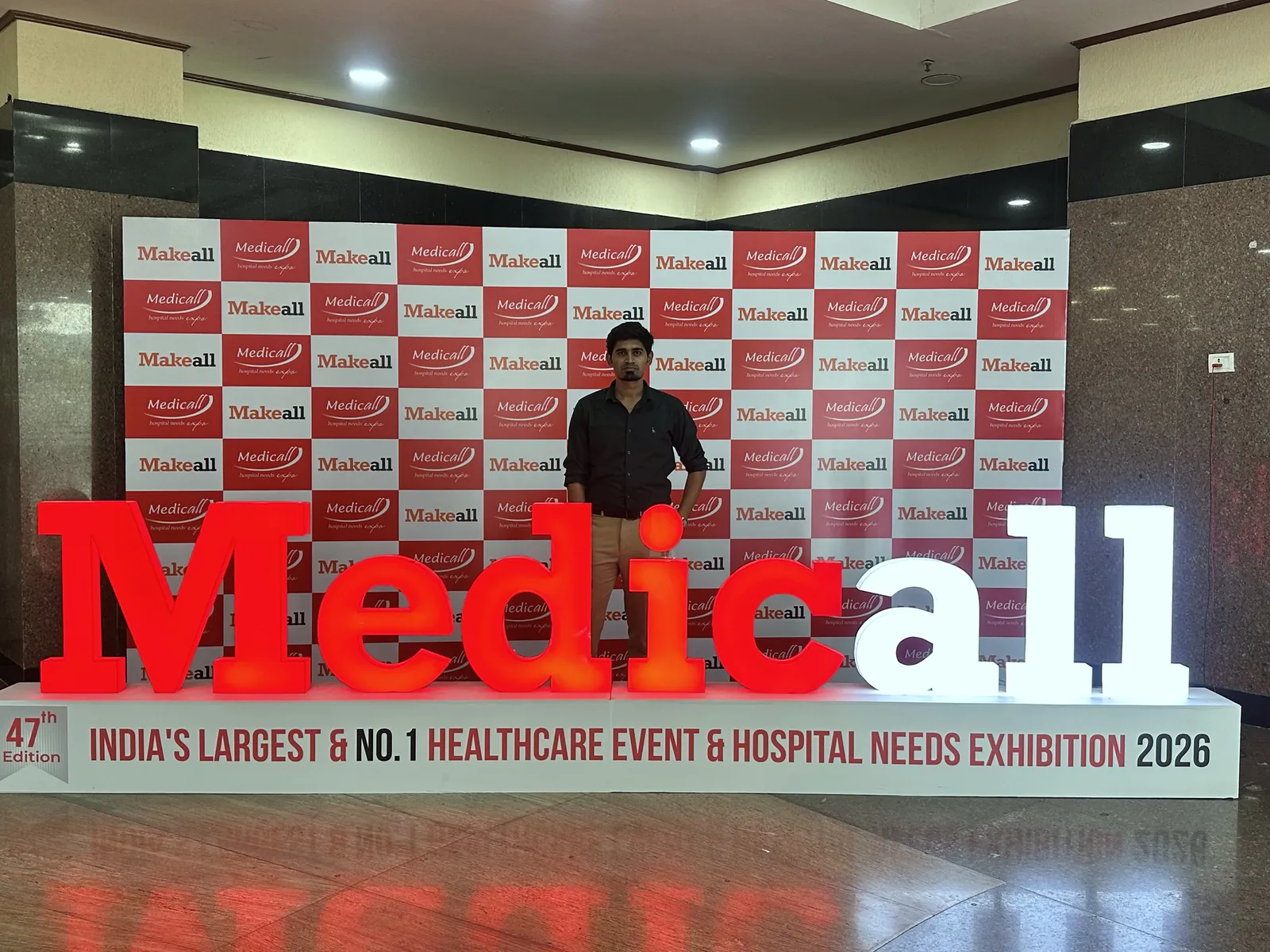
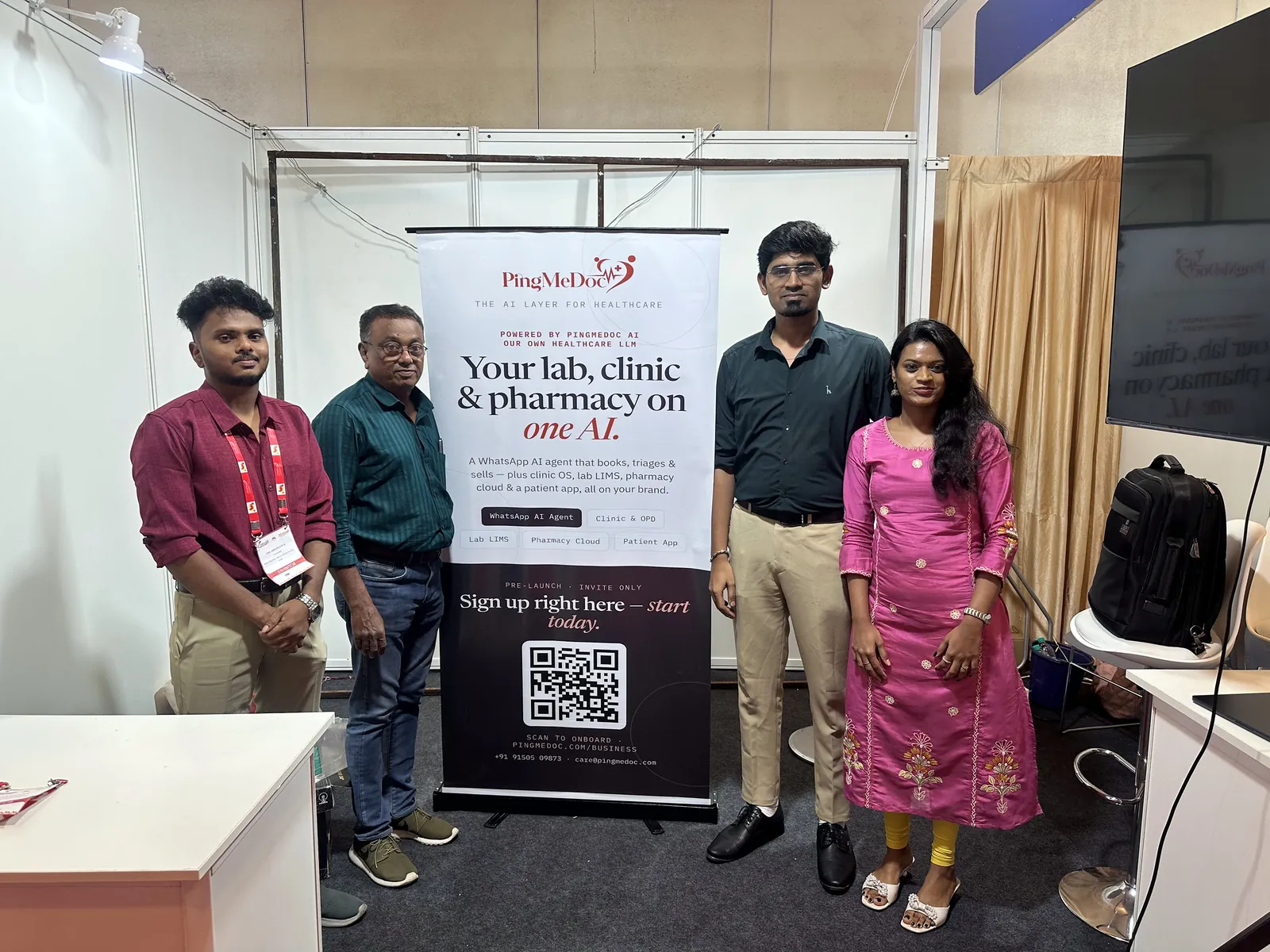
In July 2026 we took a stall at Medicall, the healthcare and hospital-needs exhibition, at the Chennai Trade Centre. Our stall, 3A6, carried one line: your lab, clinic and pharmacy on one AI.
Most of the people who stopped at the stall run one clinic, one lab or one pharmacy. They were not looking for a large enterprise system. They wanted to know whether something would work at their front desk on a Monday morning.
What we brought
- A WhatsApp AI agent that answers enquiries, books, sends a payment link and confirms, on the clinic's or lab's own number.
- Clinic software for the front desk, the consultation and the follow-up.
- Lab software, from the bill and the sample barcode to a signed report on WhatsApp.
- A pharmacy cloud and a patient app, all carrying the provider's own brand, not ours.
Show the work, not the slide
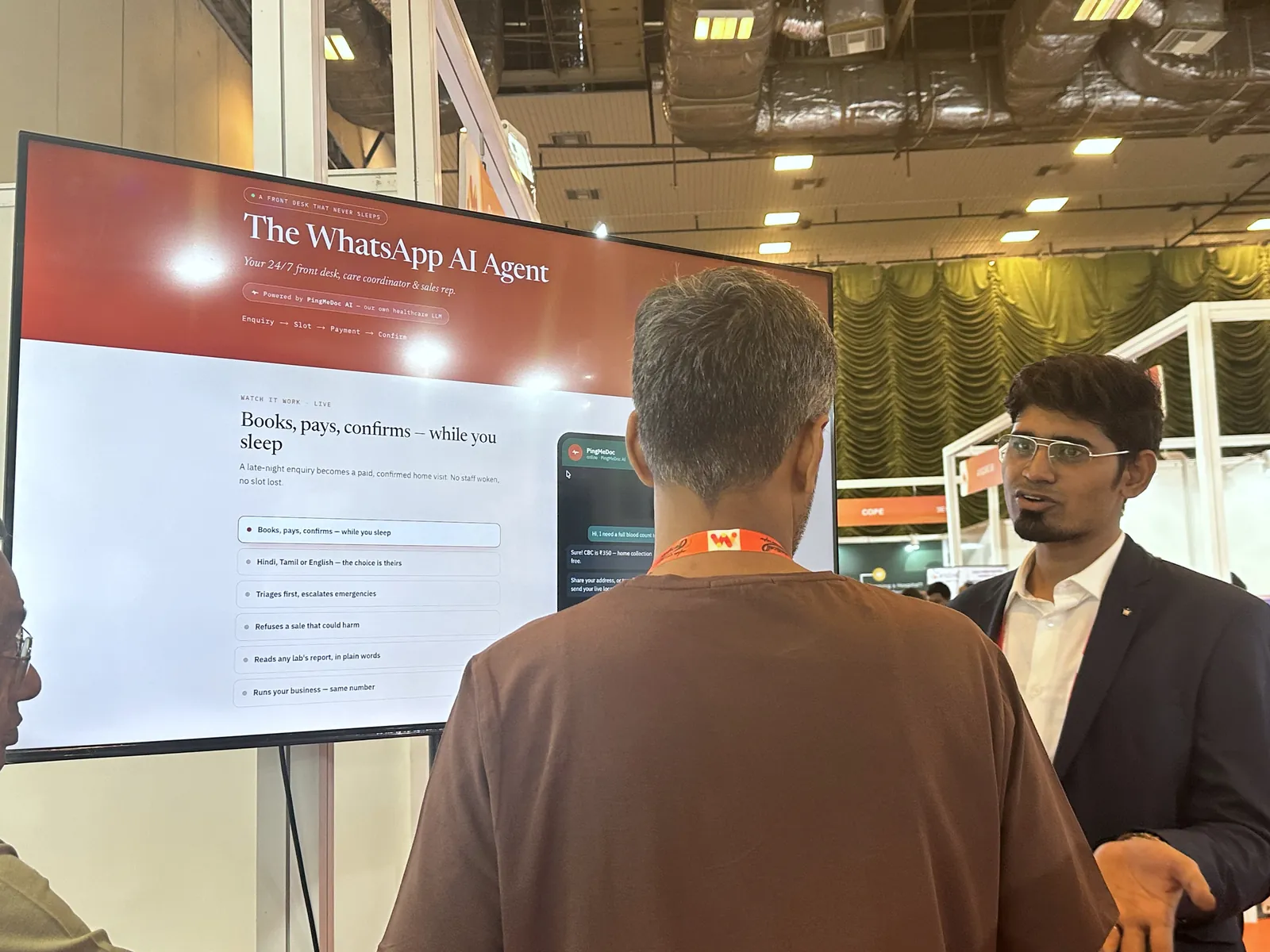
The banner brought people in. The screen made them stay. When a visitor could watch the agent take an enquiry, offer a slot, send a payment link and confirm the booking, the conversation moved from "what is this?" to "how would it work for us?"
Small providers want big-hospital tools, at their size
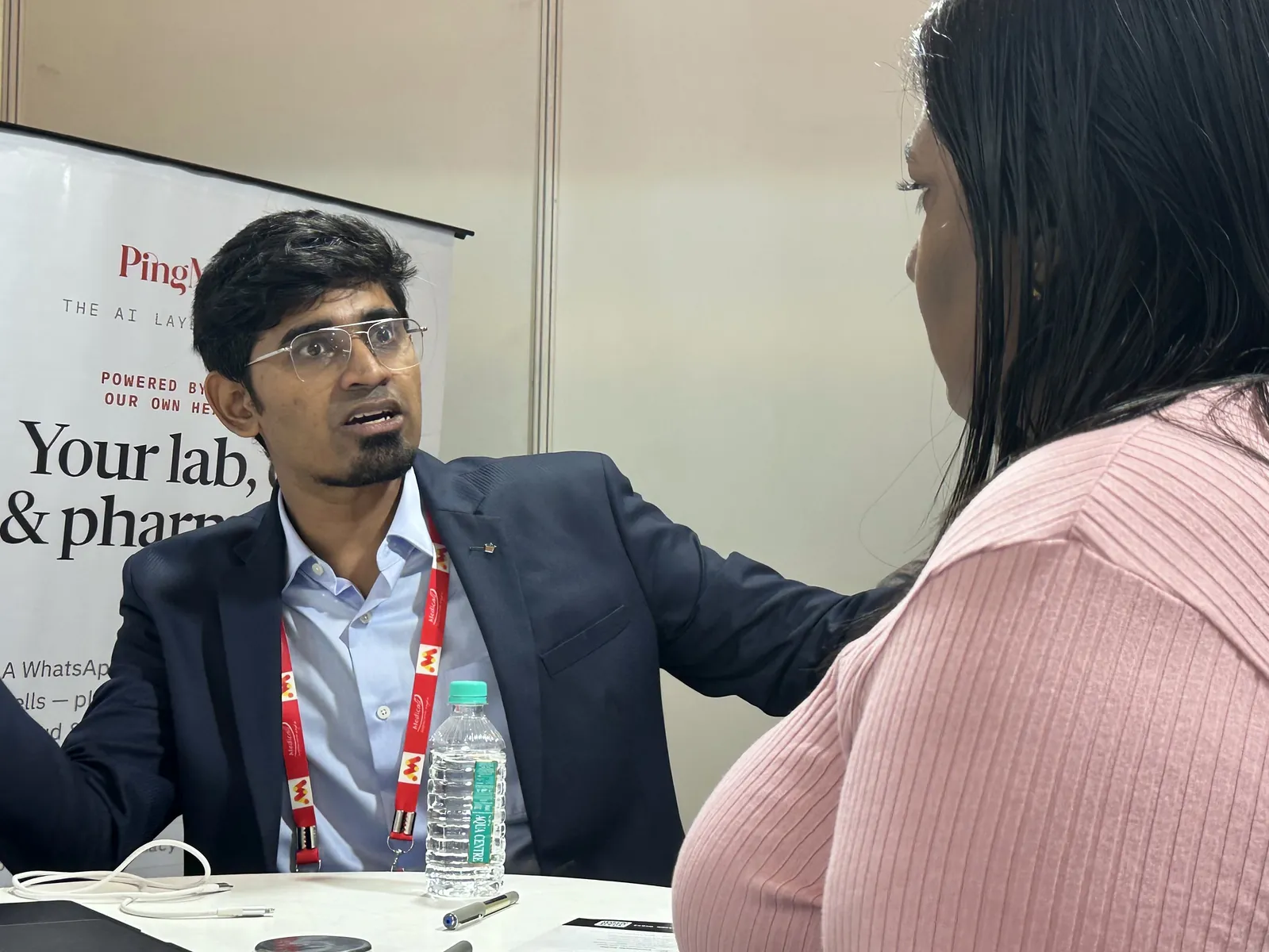
A single-doctor clinic has the same problems as a hospital: missed calls, unpaid bookings, reports that need retyping, patients who don't come back for review. It just has nobody spare to solve them. That is the gap we build for: software that does the work, not software that needs a team to run it.
Proof beats promises
The question we heard most was "Who uses this?" Our answer was simple: we do, every day. Our own clinic in Kandigai, Chennai, runs on the same software we were showing, and our own lab was moving onto it. Every feature has to survive a real working day there before we offer it to anyone else.
What comes next
We came back with a long list of demos to run and a clear direction: build for the small provider, keep the price within reach, and show it working before asking anyone to sign up.