How to choose
All lubricating drops add moisture; they differ in thickness and how long they last. Carboxymethylcellulose (CMC) and hydroxypropyl methylcellulose (HPMC) drops are thin and suit mild dryness a few times a day. Drops with sodium hyaluronate (hyaluronic acid) or polyethylene glycol last longer and suit dryness that returns quickly. If you need drops more than four times a day, wear contact lenses or have sensitive eyes, choose a preservative-free version, because preservatives can irritate the eye surface with frequent use. Thicker gels give longer relief at night but blur vision for a while. Check the label for how long the bottle lasts once opened, often a month, and write the opening date on it. Avoid redness-relief drops for everyday use; they shrink blood vessels, and the redness can come back worse.
Who really needs this
Lubricating drops suit eyes that feel dry, gritty or tired after screens, travel, AC or wind, and mild dryness in people over 40 or on certain medicines. See an eye doctor the same day for eye pain, a red eye with blurred vision, sensitivity to light, discharge, an injury or something stuck in the eye, or a red eye while wearing contact lenses. Also see one if dryness lasts more than a few weeks despite drops, as it can come from eyelid problems or other conditions.
Our picks
Editorial recommendations, not paid placements.
Everyday dryness
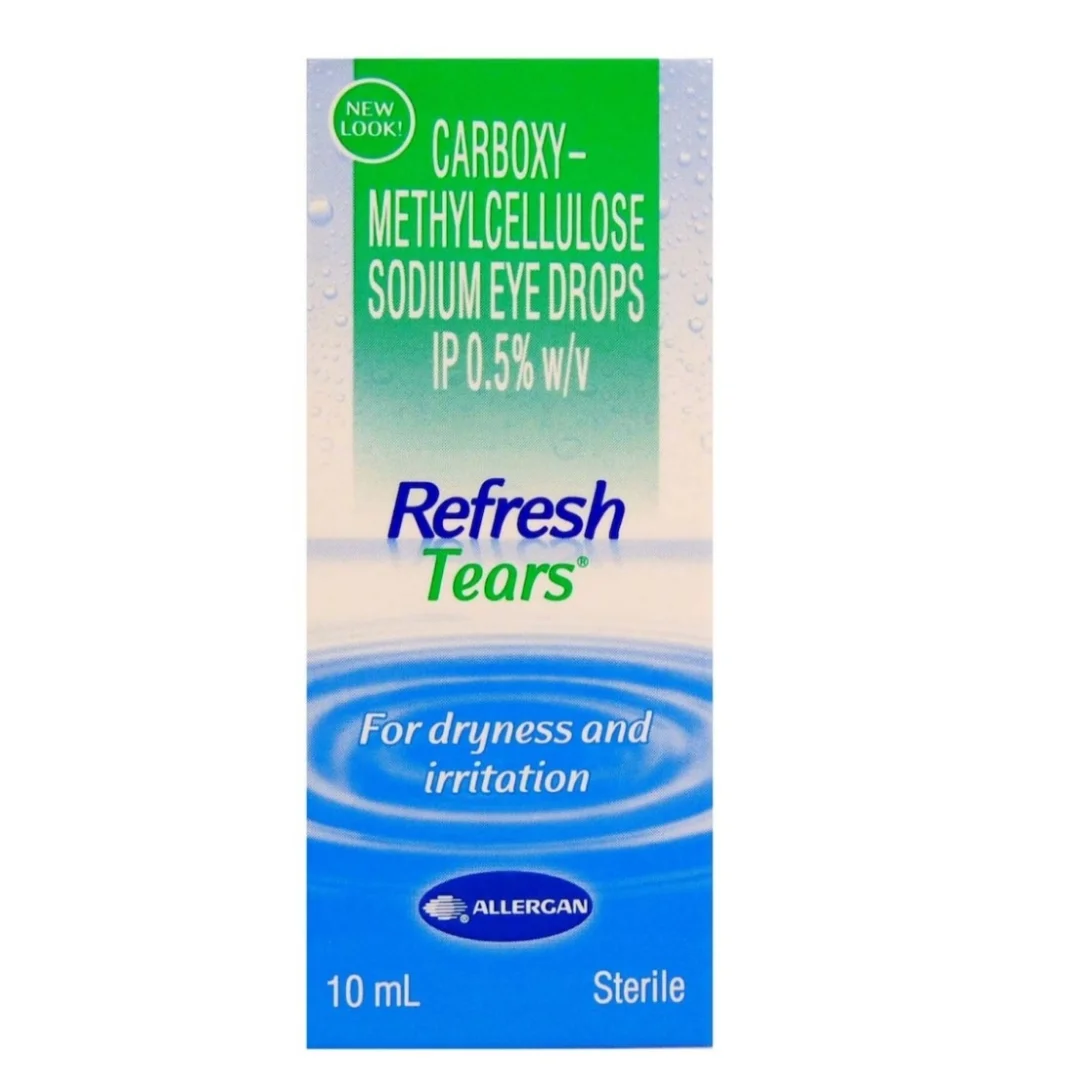
Refresh Tears
Carboxymethylcellulose drops for mild dryness from screens and AC, a few times a day.
Longer-lasting relief
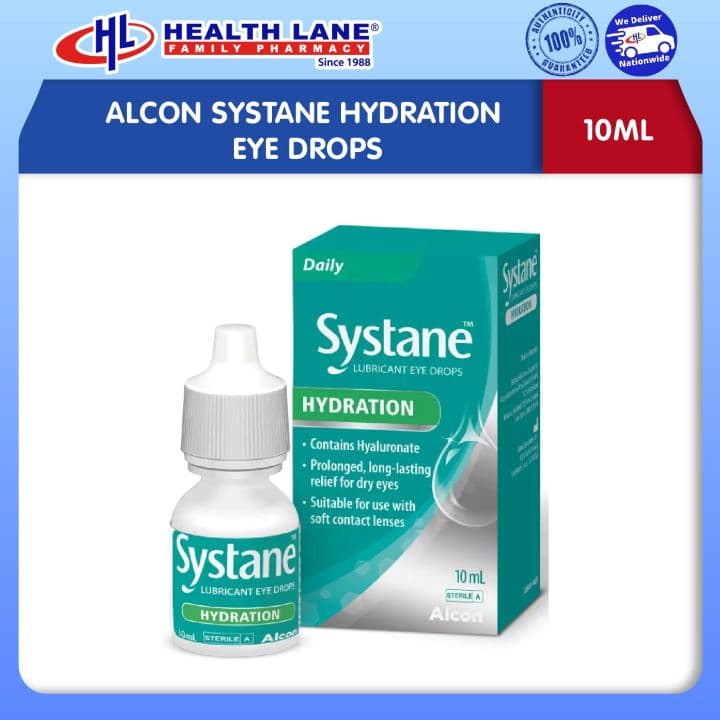
Systane Hydration
Sodium hyaluronate with polyethylene glycol and propylene glycol, for dryness that keeps coming back.
Frequent use or contact lenses
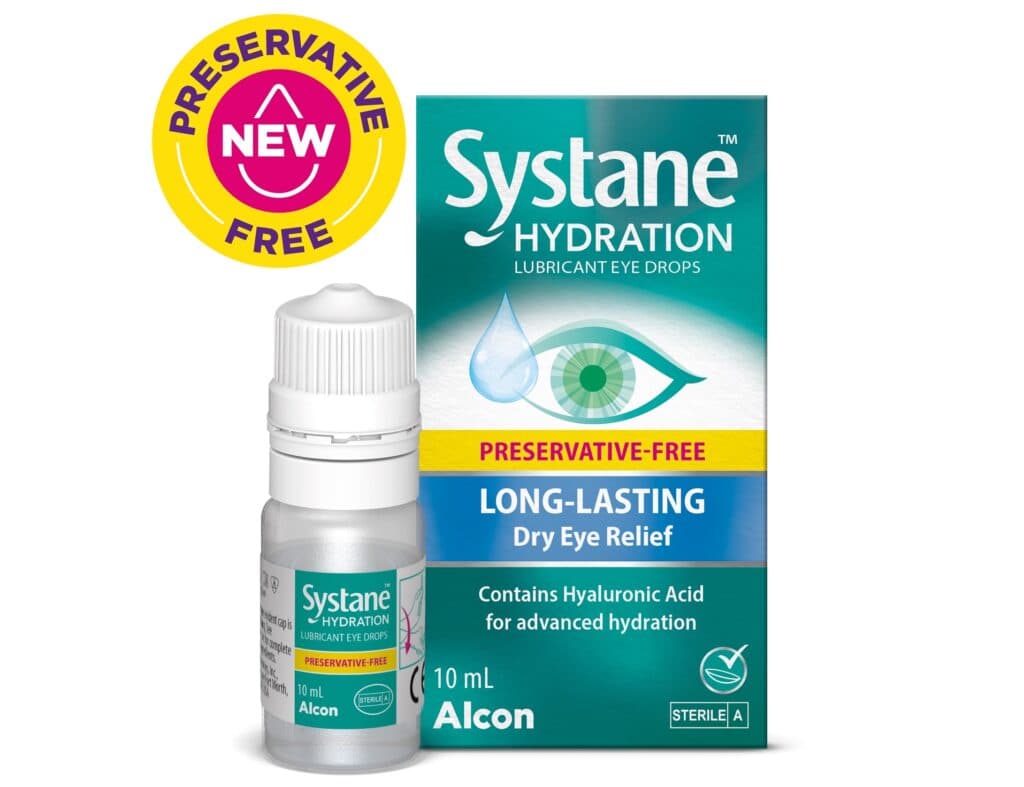
Systane Hydration PF
Preservative-free sodium hyaluronate drops for people who need drops often or have sensitive eyes.
Simple and thin
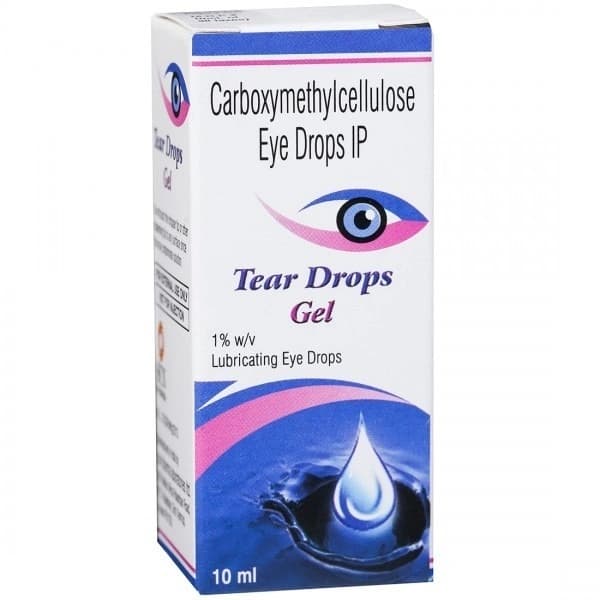
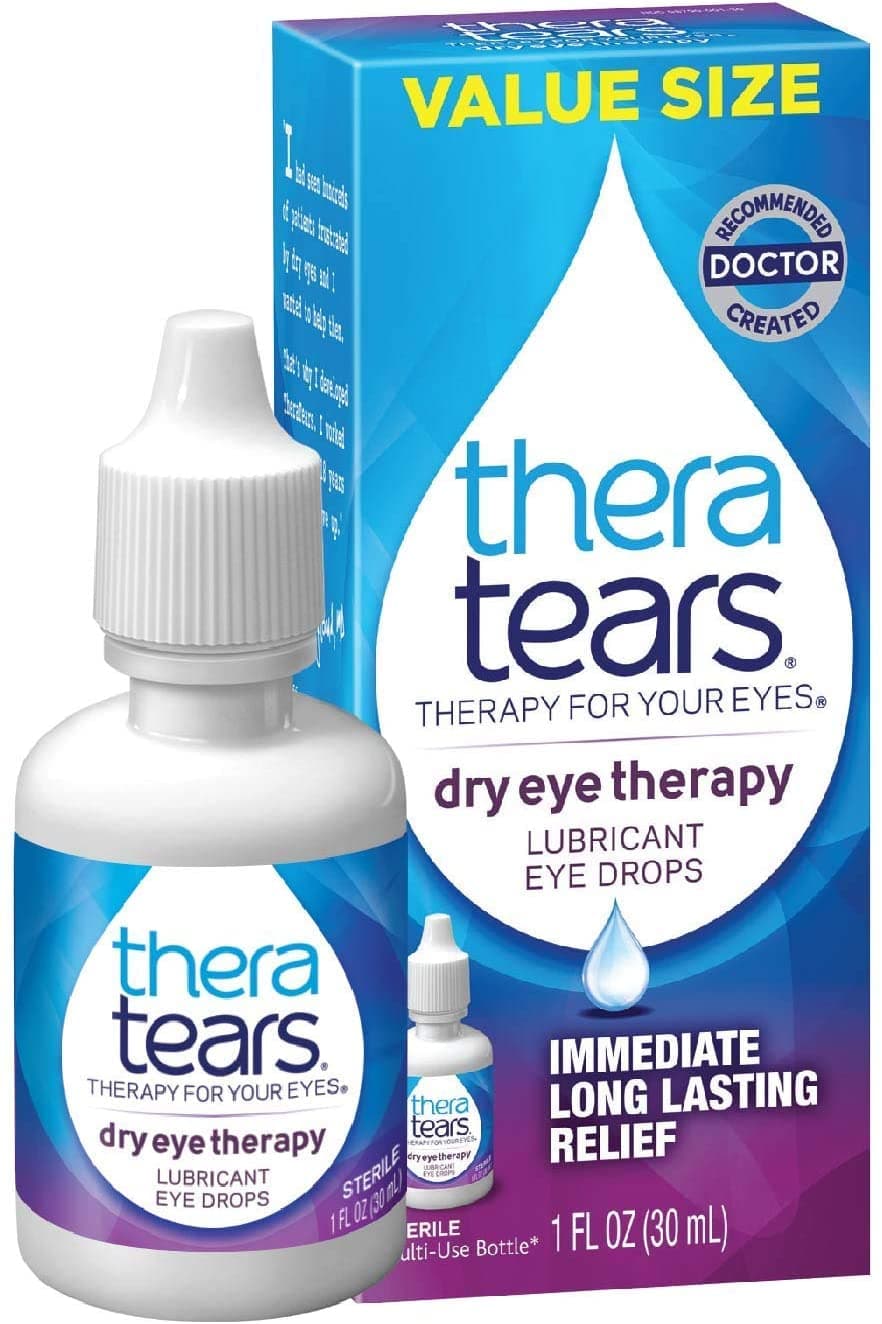
Tear Drops Lubricating Eye Drops
Hydroxypropyl methylcellulose drops for occasional mild dryness.
Mistakes to avoid
Don't use antibiotic or steroid eye drops left over from someone else or bought without a prescription; steroid drops can raise eye pressure and cause cataract. Don't touch the bottle tip to your eye or fingers. Don't keep using a bottle past its after-opening limit. Don't put drops in with contact lenses unless the pack says they are lens-safe. And don't ignore the habits: blink fully, follow the 20-20-20 rule (every 20 minutes, look 20 feet away for 20 seconds), and keep AC vents away from your face.