- Original brands
- The price on the pack
Privacy: may we measure how you found us? Never your name, number or health details.
May we remember how you found us, so we know which adverts are worth running? Allowing advertising also shares the value of a confirmed booking or payment, and the ad click it came from, with Google. We never share your name, contact details, medicines or anything about your health.
MRP, inclusive of all taxes
Delivered across India. ₹49 delivery, free above ₹999.
Pack: Syrup · 300ML
Original brandsFrom authorised sources
The price on the packNo inflated MRPs
Licensed pharmacyRx checked before packing
7 days to report a problemWrong or damaged item
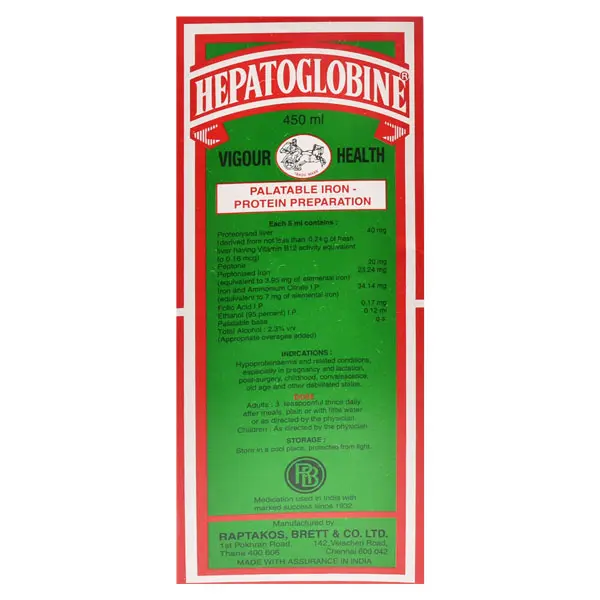
Hepatoglobine Syrup is used for supportive therapy for liver disorders.
Hepatoglobine Syrup is a medicine. Supportive therapy for liver disorders; used as a hepatoprotective/liver tonic in conditions such as fatty liver, alcoholic liver disease, hepatitis (adjunct), drug-induced liver injury (adjunct), loss of appetite and indigestion associated with liver dysfunction. It belongs to the group of medicines called Hepatoprotective (composition dependent).
Oral syrup. The dose and how long you take it depend on what you are being treated for and how you respond. Do not take more, or for longer, than your doctor has advised.
The side effects seen most often with Hepatoglobine Syrup are nausea, stomach upset, abdominal discomfort and diarrhea. Most are mild and settle as the body gets used to the medicine. Tell your doctor if one persists or worries you.
Before you start, tell your doctor about any liver, kidney or heart problem, whether you are pregnant, planning a pregnancy or breastfeeding, and every other medicine you take, including supplements and ayurvedic preparations. Some of them can change how Hepatoglobine Syrup works.
Supportive therapy for liver disorders; used as a hepatoprotective/liver tonic in conditions such as fatty liver, alcoholic liver disease, hepatitis (adjunct), drug-induced liver injury (adjunct), loss of appetite and indigestion associated with liver dysfunction.
Supports liver function, Helps improve appetite and digestion, Adjunct support in fatty liver/hepatitis/drug-induced liver injury, May help reduce liver-related weakness
Most side effects of Hepatoglobine are mild and settle as the body gets used to the medicine. The ones reported most often are:
Stop the medicine and get help at once for a rash, swelling of the face or lips, wheezing or difficulty breathing. Tell your doctor about any side effect that persists or worries you.
Oral syrup. Shake well before use and measure with a cup/spoon. Typically taken after meals; dose and duration as advised by a physician (commonly adults 1–2 tsp 2–3 times daily; children as directed).
Hepatoprotective syrups generally contain nutrients/biological extracts that support liver cell repair and bile flow, and help reduce oxidative stress. They are used as supportive therapy to improve appetite and digestion in liver dysfunction; exact action depends on the listed ingredients.
Not a substitute for treatment of serious liver disease. Consult a doctor if you have jaundice, severe abdominal pain, vomiting, dark urine, or symptoms persist. Use with caution in diabetes (many syrups contain sugar) and in patients with known allergies to any ingredient. Avoid self-medication in chronic liver disease; monitor liver function if advised by doctor.
Store at room temperature (below 25°C), away from direct light and moisture. Keep bottle tightly closed. Do not freeze. Keep out of reach of children.
Syp Liv 52 (Himalaya), Livotrit Syrup, U-Liv Syrup, Hepamerz Syrup, Silybon Syrup
Compiled from the manufacturer's prescribing information and the sources below, and reviewed by a registered pharmacist. It does not replace your own doctor's advice.
Medical disclaimer: product information is for awareness only and does not replace medical advice. For Rx medicines, a valid prescription is required. Consult your doctor or pharmacist for personalised guidance.