How to choose
Test first if you can: a 25-OH vitamin D blood test shows whether you are deficient, low or fine, and decides the dose. For maintenance, most adults take 600 to 2,000 IU of vitamin D3 a day; 2,000 IU capsules are common. Do not go above 4,000 IU a day without a doctor. The 60,000 IU (60K) capsules, tablets and sachets are a treatment dose, usually taken once a week for about eight weeks and then less often, on a doctor's plan after a test. Choose D3 (cholecalciferol) over D2. Take it with your largest meal, because vitamin D needs fat to be absorbed. For babies, drops or syrup with a measured dose are easiest; 400 IU a day is the amount usually advised for infants, but follow your paediatrician. If your diet is low in milk, curd and paneer, ask whether you also need calcium.
Who really needs this
People who spend little time in the sun, cover most of their skin, are over 60, are overweight, are pregnant or breastfeeding, or have bone pain or a low test result. Breastfed babies usually need drops. Talk to a doctor before taking vitamin D if you have kidney disease, kidney stones, high calcium or sarcoidosis, or take regular medicines.
Our picks
Editorial recommendations, not paid placements.
Daily, for adults
D-Rise 2000 Capsule
Vitamin D3 2,000 IU, a common daily maintenance dose. One a day with a meal.
Daily, another brand
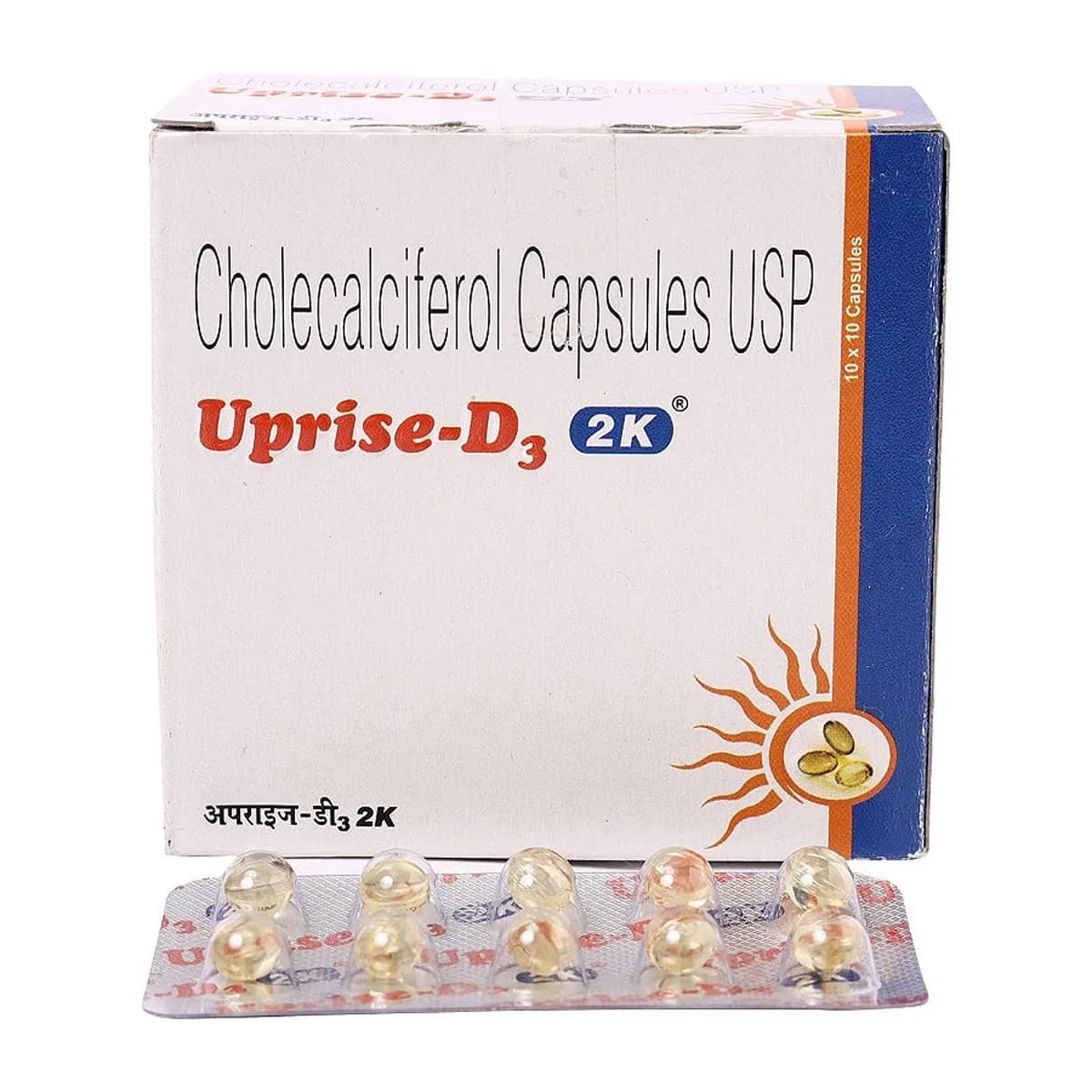
Uprise D3 2K Capsule
Vitamin D3 2,000 units, the same daily dose from another maker.
Babies and young children
Uprise-D3 Syrup
400 IU of vitamin D3 in 0.5 ml, the daily amount usually advised for infants. Give what your child's doctor advises.
Only on a doctor's plan
60,000 IU weekly doses
A treatment dose for a proven deficiency, usually for about eight weeks. Don't take it month after month without a repeat test.
Mistakes to avoid
Don't take 60K every week indefinitely; vitamin D builds up in the body, and too much raises calcium, causing nausea, thirst, constipation, confusion and kidney stones. Don't double up from several products, such as a multivitamin, a calcium-D3 tablet and a separate D3 capsule, without adding up the total. Don't take it on an empty stomach. Don't skip the follow-up test after a treatment course. And don't expect it to fix tiredness or hair fall unless your level was actually low.